Monday, October 31, 2016

Mesopotamia: Hammurabi and Hammurabi's Code


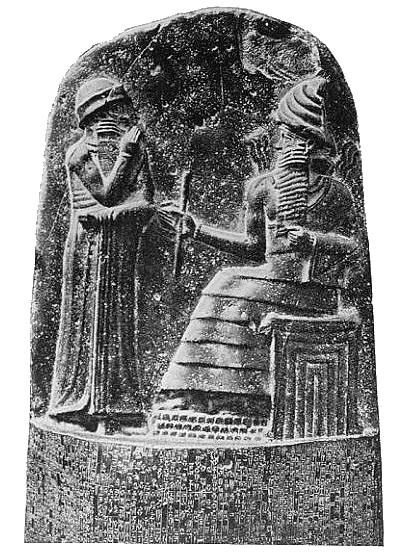
 Today's Focus Question  Who was Hammurabi and what was the significance of Hammurabi's Code? 


Who was Hammurabi?  According to your textbook, Hammurabi "became king of the city of Babylon around 1792 B.C. For more than 30 years, he built up his army. Then he launched a series of all-out attacks against his rivals. Within a few years he had united Sumer and northern Mesopotamia into a new Babylonian Empire." 

To learn more about Hammurabi, watch the brief video below. 


Hammurabi's Code  Why was Hammurabi's law code so historically significant? To begin to understand, watch the video below. 


Hammurabi's Code Activity  Now you will have an opportunity to examine Hammurabi's code of laws in detail at the website here. You will explore real situations that Hammurabi actually faced. You will then decide what you think to be a fair way to deal with the problem. Finally, you will discover what Hammurabi declared. You will use the document You Be the Judge: Hammurabi's Code, which can be found in your Social Studies Google Classroom.
Homework  Complete the You Be the Judge: Hammurabi's Code assignment, which is due Friday, November 4

Friday, October 28, 2016

Sumerian Civilization Google Mapping and Revisiting the Crisis in Syria


Google Mapping the Sumerian Civilization  Today we are going to pin the historical event summary you researched this week about the Sumerian civilization, as part of the "Historical Events" layer of your Social Studies Events Map. Follow the steps: pin event in its proper geographic location, add a title, include the text from your historical event summary, post a related image, and consider including a specialized icon for your pin. 

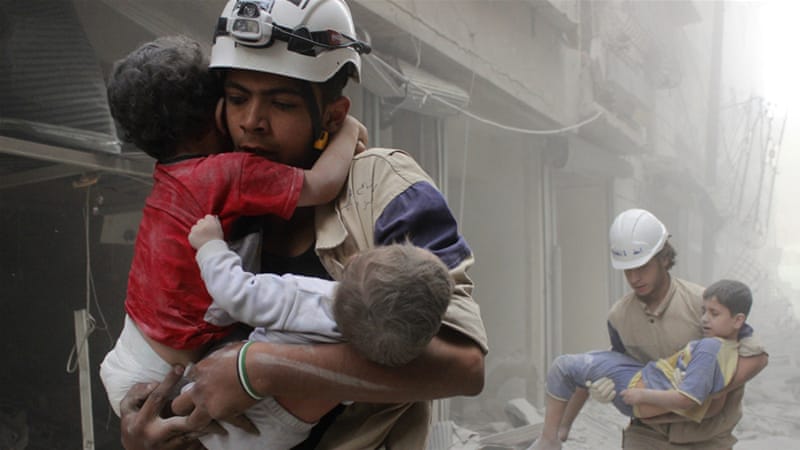
The Crisis In Syria: 'The White Helmets' Documentary  We continue to examine both historical events and current events that have taken place and continue to occur in the Middle East. Today we revisit the evolving crisis in Syria by watching the short documentary The White Helmets about a courageous group of Syrian citizens who risk their lives daily to rescue others. 

If after watching you would like to learn more about the efforts of the White Helmets and show your support for their work, visit the site Support the White Helmets

Thursday, October 27, 2016

Mesopotamia: The First Empires and Summarizing the Civilization of Sumer

Sargon the Great was the first ruler to unite the city-states of Sumer into one empire.


 Today's Focus Question  What is an empire and how did they first develop? 


Flocabulary Video: 'The Fertile Crescent'  Let's review where we've been and where we're going on our journey to understand the region that gave birth to the world's first civilization. Check out the video from Flocabulary below.


The First Empires: Guided Reading  Today we will learn how strong rulers finally conquered Mesopotamia's independent city-states to create the world's first empires. We will read the excerpts from our textbook below.  


Summarizing the Mesopotamian Civilization of Sumer  Earlier this week you researched and gathered essential details about the world's very first civilization, which began in the Middle East region known as Mesopotamia. If you haven't already, it's time organize your information about Sumer in an original summary that you write, and will later become the foundation for the text you include on the historical layer of your Social Studies Events Map.   

For a reminder on how your summary will be assessed, check out the rubric below. 


Homework  Complete the summary component of your Noteaking and Summary Guide (Sumerian Civilization) by tomorrow, Friday, October 28, in order to include it as part of a "pinned story" on your Social Studies Events Map  

Wednesday, October 26, 2016

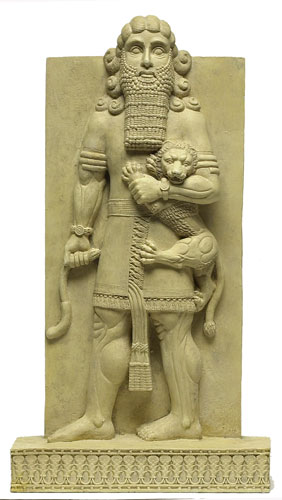
Mesopotamia: The Legend of Gilgamesh


Background on the Story of Gilgamesh  "The story of the god-man Gilgamesh is one of the oldest stories in the world; it was inscribed onto clay tablets over 5,000 years ago in Mesopotamia. There are many versions of the story but the first people who told it were called Sumerians and Gilgamesh was once their king. The people who lived in Mesopotamia discovered many things: irrigation, the wheel, the first codes of law, the 60-minute hour, and most important, writing. Without writing the epic of Gilgamesh would certainly have been lost. The Sumerians, and later other Mesopotamians such as the Akkadians, Babylonians, and Assyrians, wrote the story in cuneiform, the first script in the world." - Ludmila Zeman, Gilgamesh the King 

Read-Aloud: Gilgamesh the King  Today we will be reading together the story Gilgamesh the King, retold and illustrated by Ludmila Zeman. Some consider Gilgamesh to be the world's first literary superhero. As we read, see if you can find any connections or parallels between Gilgamesh and other superheroes you are familiar with.  

The British Museum Website: "Gilgamesh and the Cedar Forest"  Want to explore another tale of Gilgamesh and his adventures? Check out the interactive story of "Gilgamesh and the Cedar Forest" at the British Museum's website here.

Monday, October 24, 2016

The Layers of Middle East History: Examining Mesopotamian Civilization


 Today's Essential Question  * How are ancient areas of the Middle East both different and similar to today? 


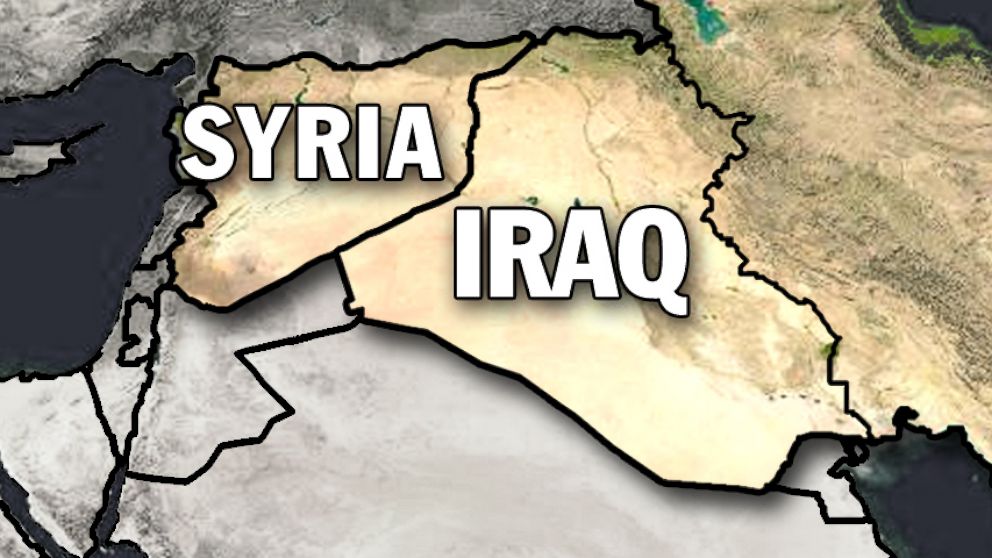
Back to the Past: Examining the Middle East's First Civilization  Last week, as a class we discussed the idea of "layers of history," in which its important when examining a geographic place to look at both its present and its past. In our previous lesson we examined the current crisis in Syria, a country in today's Middle East. Thousands of years before the present civil war in Syria, parts of Syria and neighboring Iraq made up a region known as Mesopotamia. Within Mesopotamia, in what is now southern Iraq, an area known as Sumer saw the birth of the world's very first civilization. 

Today, I want you to imagine that you are going back in time to investigate Mesopotamia's Sumerian civilization. With the same journalistic eye you used to to examine the crisis in modern Syria, your objective is to ask important questions and gather essential details about Sumer to help you better understand this geographic place from history. Ultimately, you will you use the information you compile to write an objective summary about Sumerian civilization, which you will then include as part of a "pinned story" within the historical layer of your Social Studies Events Map. My hope is that you we also begin to make some critical connections between what is happening in the Middle East today and what happened there at the dawn of civilization thousands of years ago. 

To begin, locate the document Noteaking and Summary Guide (Sumerian Civilization) in your Social Studies Google ClassroomAdd some Who, What, When, Where, How, and Why questions that you hope to find the answers to as you begin your investigation.

Video: The Rise of Sumerian Civilization  Now let's begin to find the answers to some of your guiding questions and gather the information you will need to write your summary on Sumerian civilization. Our first source of information will be the video featured below. 


Guided Reading: Mesopotamia's Civilization  Next, let's read together an excerpt from the Social Studies textbook about Mesopotamia's earliest civilization (pages 133-137). You will continue to take notes using your Noteaking and Summary Guide (Sumerian Civilization).

Homework  Complete the Noteaking and Summary Guide (Sumerian Civilization) by Friday, October 28

Friday, October 21, 2016

Current Event Friday

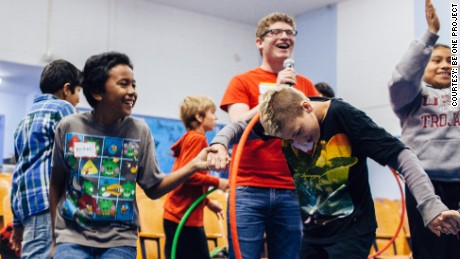
Find out today why Matthew Kaplan is considered to be a CNN Hero. 


A View of Syria In light of learning about the conflict in Syria, I would like to take a moment to bear witness to the destruction that is happening there. The video was taken by drone of the ruins of the besieged city of Aleppo. 

Adding to Our Social Studies Google Map  Today we are going to pin the current event story you researched this week from last week's "The Week in Rap" episode, as part of the "Current Events" layer of your Social Studies Events Map. Follow the steps: pin event in its proper geographic location, add a title, include the text from your current event summary, post a related image, and consider including a specialized icon for your pin.


CNN Student News  As we watch CNN Student News today, identify one or two news stories that you may want to pinpoint geographically and place on the Current Event layer of your Social Studies World Map via Google Maps. 

The European Space Agency; the Philippines; Russia; Arizona; and Bermuda were all featured in today's segment. After pinning at least one of these places on your map, consider the most important question: What happened here? You should include a title for the event, the date(s) the event took place, a brief summary of what happened, and include an appropriate photo or video. If you need to refer to a transcript of today's broadcast you can find it here.

Thursday, October 20, 2016

Google Mapping the Current Conflict in Syria


Google Mapping the Current Conflict in Syria  Now that most of you have finished your summary of the article Growing Up in the World's Most Dangerous Place using the Noteaking and Summary Guide, it's time to begin the Google Mapping component of this project. Follow the steps below. 
  1. If your summary on the crisis in Syria is complete, copy the text of your summary from the Notetaking and Summary Guide Google Doc. 
  2. Locate your Social Studies Google Map. It can be found in your Google Drive or at the Google Maps website. (Once there, click on 'Menu,' 'Your Places,' and then 'Maps.' Click on the desired map and then 'Open in My Maps.') 
  3. Make sure your map is titled Social Studies Google Map
  4. Make sure you have created two layers: "Current Events" and "Historical Events." 
  5. Place a pin on an appropriate geographic location associated with the article "Growing up in the World's Most Dangerous Place," within the Current Events layer. 
  6. Provide an appropriate title for this story/event. 
  7. Paste the text of your summary into the text box for this pin. 
  8. Include an appropriate photo and/or video to accompany the story/event.
  9. Select a pin icon that is relevant to the story/event.
Below you can find a reminder of how this part of the project will be assessed. 


Next week we will be going back in time, as we learn more about the world's first civilization, Mesopotamia, which began very close to where you placed your pin today. You'll have another opportunity to place a pin, but this time as part of your "Historical Events" layer. What connections will you make between Middle East's present and its past? Stay tuned. 

Academic Business Time  Considering this is the last day of the first quarter, if you have finished the summary writing and Google mapping components of this project, you may use the remainder of this class period to take care of your academic business. You may finish incomplete assignments, retake missing assessments, communicate professionally with teachers using School Loop, read, and/or take AR tests. Use your time wisely. 

Tuesday, October 18, 2016

Summarizing the Current Conflict in Syria

What is happening in Syria? Today you will continue to gather key details and begin to write your summary about recent events.


Project and Assessment Overview  What are the different components of this summary writing and Google Mapping project? How will you be assessed? Check out the rubric below. 


Summary Writing  After you've gathered your essential details about the current conflict in Syria, it's time to write your summary. To remind yourselves of the various components involved in summary writing, check out the video from Flocabulary below. 


Monday, October 17, 2016

Google Mapping History and the Present

What layers of history may exist below where you stand right now?

 Today's Essential Question  * How are ancient areas of the Middle East both different and similar to today? 


The Layers of Where We Are Now Where are we right now? Yes, we are at Lakeview Middle School. I'm now going to open up Google Maps and show Lakeview Middle School on my Google Map as part of a "Current Events" layer. What do know about the history of this place? Is there a historical layer that exists beneath this modern one? Take some time to discuss in small groups and then you'll share out what you know about the history of the geographic site on which Lakeview was built.

Now, I will turn off Google Maps “Current Events” layer and turn on “ Historical Events” layer. What do you notice? Yes, this geographic site was once the home of an Ohlone Indian burial ground. Next, notice that when I turn both layers on you can see both pinned stories (Lakeview’s present and past) are accessible together.

Why are both layers are important to understanding this geographic place? What connections can be made between the two? How Lakeview’s past can help inform its present and even future? In this lesson you will also be examining a geographic place in the world, locating the place on a map, and making connections between its present and past.

Screen Shot 2016-09-27 at 3.03.27 PM.png
Screen Shot 2016-09-27 at 3.03.08 PM.png

Life in Syria Today  Recently we began our unit on Ancient Mesopotamia, which once existed in parts of what is now Iraq and Syria. Both of these places have been in the news a lot recently. Today we are going to examine what it's been like growing up in Syria in recent years. We will read the article Growing Up in the World's Most Dangerous Place from Junior Scholastic. Your task while you read is to take notes on the Who, What, When, Where, Why, and How details of the article, and later write a summary using the Noteaking and Summary Guide located in your Google Classroom. This summary text will later be included as part of a post that you pin in the appropriate geographic location, within the "Current Events" layer of your Social Studies Google Map. As we learn more about the ancient Middle East this school year, this modern story will serve as a point of reference to think about how this region has changed over time, while still serving as foundation for what is taking place there today. 


Friday, October 14, 2016

Current Event Friday

Protests against the government in Ethiopia is one news story featured in this week's edition of The Week in Rap.

Flocabulary: The Week in Rap  Many important news events took place around the world this week. Let's review some of them with our friends at Flocabulary.


Researching and Summarizing a Current Event  This week Flocabulary rapped about Hillary Clinton and Donald Trump's second presidential debatethe devastation caused by Hurricane Matthewprotests in Ethiopia against the government, Russian inflatable jets, and Samsung's recall of overheating phones

Your objective is to select the story the most interests you, click the link for additional information, take notes, and then write a current event summary. Locate the document Current Event Notes and Summary in your Social Studies Google Classroom. This assignment will be due next Friday, October 21

Thursday, October 13, 2016

Mesopotamia: The Civilization of Sumer (Day 2)


Appropriate Behavior with the Substitute  I'm sorry I couldn't be with you today. I fully expect you to be on your very best behavior with your substitute today. Please stay in your seats, stay focused on the work outlined here on the Blog, and, most importantly, treat your substitute with decency and respect. Remember, I can monitor your computer use from home and expect to see that you focused on your assignments and not goofing around.If you don't have a working Chromebook today, partner up with someone at your table and work with them. I expect to receive a positive report form the substitute upon my return. Students that choose to not to be their best selves today may receive serious consequences upon my return. Have a great day!

The Civilization of Sumer: Guided Reading  Today we will continue to learn about the early Mesopotamian civilization of Sumer. You will read an excerpt from your Social Studies workbook entitled The Civilization of Sumer - Reading, which you can find in your Social Studies Google Classroom. You will also record key information from the selection, using the document Facts About Sumerian Society, is also located in your Social Studies Google Classroom. Read the selection in small groups or individually and record important questions and answers on the document as you go.  

Academic Business Time  Tomorrow, several important assignments are due, including The Civilization of Sumer - Cognitive Content Dictionary and the 
Mesopotamia: From Nomads to Farmers EDpuzzle activity. If need be, you may use the remainder of class time to work on completing your assignments. Otherwise, you may use this time to silent read, take AR quizzes, read Newsela articles of your choice, or practice your typing.

Homework  (1.) Complete the Facts About Sumerian Society assignment, which is due next Friday, October 21(2.) Complete The Civilization of Sumer - Cognitive Content Dictionary and the Mesopotamia: From Nomads to Farmers EDpuzzle activity, both of which are due tomorrow, Friday, October 14

Wednesday, October 12, 2016

Mesopotamia: The Civilization of Sumer


The Civilization of Sumer: Vocabulary Study  Today we are going to be studying the key vocabulary related to the 'Civilization of Sumer,' using the document The Civilization of Sumer - Cognitive Content Dictionary located in your Social Studies Google ClassroomWe will be using an excerpt from our Social Studies textbook to help us understand the lesson's key words and concepts.

Homework  Complete your The Civilization of Sumer - Cognitive Content Dictionary, which is due Friday, October 14.  

Tuesday, October 11, 2016

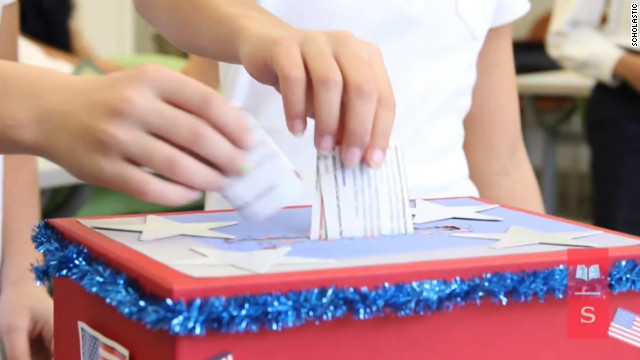
Lakeview Students Rock the Vote!

Are you ready to cast your vote? 


California Student Mock Election  Alex Padilla, Secretary of State of California, wants young people to get involved in the democratic process. He says: "Young people have the potential to be a powerful force in elections, but only if they get involved and make voting a habit. To encourage students to become active voters once they are old enough to cast a ballot, [we] are inviting high school and middle school students, teachers and principals to participate in the MyVote California Student Mock Election, which will take place on October 11, 2016. School registration is now open."

"The Student Mock Election will stir students' interest in voting by tapping into the excitement of the campaign season. As students learn about the candidates and issues, they discover how government and politics affect every part of their lives. They gain firsthand knowledge of how citizens make their voice heard in our democracy, and experience the power of their votes when they are joined by thousands of California students and millions more across the United States who will vote in student mock elections this year."


Today, Lakeview students, you will have the opportunity to have your voice heard and rock the vote in the Library at lunch. 


Exploring the Issues  Today, you will have the opportunity to vote for president of the United States, the United States Senate, and on various California propositions. To help you learn more about the candidates and to better understand the issues, I put together the Google Slide show featured below. I will also provide each of you with an Election Study Guide, on which you can take notes as you work to make informed decisions when you cast your ballot today. 


Now it's time for you to do a little independent research about the issues and candidates before you cast your vote. To learn more about the propositions and the California candidates for the U.S. Senate check out the link here. To learn more about the presidential candidates check the links here and here.

Monday, October 10, 2016

Mesopotamia with EDpuzzle


Getting Started with EDpuzzle  It's time to sign-up for an exciting online interactive video program:  EDpuzzle. Once you get there, click on "I'm a new student." Then click 'Sign up with Google.'

EDpuzzle Video: "Mesopotamia: From Nomads to Farmers"  Today you will be watching a video and answering a series of questions about Mesopotamia. The video will stop periodically and you'll be required to answer a question before being allowed to continue. To be successful, you must pay close attention to the content of the video. If you have your own headphones, please use them. Otherwise, you must listen to your video as quietly as possible.  You can watch the video and answer the questions at your own pace. If you don't finish in class today, please finish for homework outside of class. This assignment will count towards your assessment grade. 

Homework  Complete the Mesopotamia: From Nomads to Farmers EDpuzzle activity. Deadline: Friday, October, 14. 

Thursday, October 6, 2016

The Fertile Crescent: Main Idea and Details


Appropriate Behavior with the Substitute  I'm sorry I couldn't be with you today. I fully expect you to be on your very best behavior with your substitute today. Please stay in your seats, stay focused on the work outlined here on the Blog, and, most importantly, treat your substitute with decency and respect. Remember, I can monitor your computer use from home and expect to see that you focused on your assignments and not goofing around.If you don't have a working Chromebook today, partner up with someone at your table and work with them. I expect to receive a positive report form the substitute upon my return. Students that choose to not to be their best selves today may receive serious consequences upon my return. Have a great day!

The Fertile Crescent: Main Idea and Details  Our central task as we read today about Mesopotamia's "Fertile Crescent" is to identify the main ideas and details of key paragraphs and passages from our text. To better understand how to identify main ideas, check our the graphic below.  
The supporting details, on the other hand, serve to support, strengthen, and elaborate upon the main idea.  

In your Social Studies Google Classroom, you will find the document The Fertile Crescent: Main Idea and Supporting Details. With the members of your team, read each passage or paragraph and work to identify the main idea and supporting details.  

Academic Business Time  On Monday several important assignments are due, including you Civilization Concept MapThe Fertile Crescent: Main Idea and Supporting Details and The Fertile Crescent - Cognitive Content Dictionary. If need be, you may use the remainder of class time to work on completing your assignments. Otherwise, you may use this time to silent read, take AR quizzes, read Newsela articles of your choice, or practice your typing.   

Wednesday, October 5, 2016

Mesopotamia: The Fertile Crescent (Day 2)


Warm-Up Video  Let's get familiar with today's content by watching the brief video below.  


The Fertile Crescent: Main Idea and Details  Our central task as we read today about Mesopotamia's "Fertile Crescent" is to identify the main ideas and details of key paragraphs and passages from our text. To better understand how to identify main ideas, check our the graphic below.  
The supporting details, on the other hand, serve to support, strengthen, and elaborate upon the main idea.  

In your Social Studies Google Classroom, you will find the document The Fertile Crescent: Main Idea and Supporting Details. With the members of your team, read each passage or paragraph and work to identify the main idea and supporting details. 

Homework  Complete the assignment The Fertile Crescent: Main Idea and Supporting Details, which is due and must be 'turned in' by Monday, October 10.     

Tuesday, October 4, 2016

Mesopotamia: The Fertile Crescent


Introductory Video: Discover Mesopotamia with Bugs Bunny  Let Bugs Bunny take you on a one minute introductory tour of Mesopotamia, the world's very first civilization, in the video below.  


The Fertile Crescent: Vocabulary Study  Today we are going to be studying the key vocabulary related to the geography of Mesopotamia, also known as the 'The Fertile Crescent,' using the assignment The Fertile Crescent - Cognitive Content Dictionary located in your Social Studies Google Classroom. We will be using an excerpt from our Social Studies textbook, which can also be found in your Social Studies Google Classroom (and which you can also find here), to help us understand the lesson's key words and concepts.

Homework  Complete the assignment Fertile Crescent - Cognitive Content Dictionary, which is due on Monday, October 10.  

Monday, October 3, 2016

What Is a Civilization?


Concept Map: Civilization  The world's first cities began as farming villages. As early cities grew in size and power, some of them gave rise to civilizations. But what exactly is a civilization? Considering that we are studying 'Ancient Civilizations' this year, understanding the answer to that question is essential. 

To help us make better sense of what a civilization is, we are going to make a Civilization Concept Map today. You can find a document of the same name in your Social Studies Google Classroom.

Using the Concept Map (and the textbook excerpts below), we will first examine the characteristics or features of a civilization. Next, we will come up with a list of non-examples: examples that do not fit the criteria for a civilization. Then, we will decide on examples that do seem to embody our understanding of what a civilization is. Finally, we will decide on a definition for the concept  of civilization. Additionally, we will add images throughout our concept map to help us better understand the concept. (This assignment is due Monday, October 10.    


Review Video  Now that we have a better sense of what a civilization is, let's review what makes a civilization a civilization by watching the short informative video below. How is your civilization concept map both similar and different to the information put forth in the video?