Friday, February 24, 2017

Edpuzzle Video Assessment: The Indus Valley


Edpuzzle Video Assessment: The Indus Valley  Today you will demonstrate some of what you've learned about the Indus Valley Civilization by completing a mini-video assessment through EDpuzzle. After the clicking the link, click "Login," "Student," and then "Sign in with Google."

Once you're logged in, locate the Social Studies video "Indus Valley Civilization: Crash Course." This is the same video we watched as a class yesterday and will cover some of the same things you have been learning about this week. If you have headphones, use them. As the video progresses, it will stop periodically and ask you a question. You must answer the question in order to proceed. Your score on this activity will count towards your assessment grade in this class. If you don't finish your EDpuzzle in class today, please complete it by Wednesday, March 1. Good luck!

Wednesday, February 22, 2017

The Indus Valley Civilization: Guided Reading and Videos


 Today's Focus Question  How did people live in the first Indus Valley civilization?


The Indus Valley Civilization: "Into" Video Civilization  Before we read about the Indus Valley Civilization, we are going to watch a short computer-generated video that I think will help you better visualize what life may have been like for people living during this time. 


The Indus Valley Civilization: Interactive Website and Cloze Reading Activity  Today you are going to have an opportunity to explore an interactive and engaging website about the Indus Valley civilization and its people. The site hosted by the BBC can be found here. As you can see by the image below the site is organized into several different categories of information. As you explore each one, I want you to take notes using the Indus Valley Civilization - Cloze Reading Activity, which can be found in your Social Studies Google Classroom. Make sure to fill in the blanks with the pertinent information. 

Below you can also find a series of images to better help you understand the geography and economy of the Indus Valley civilization and the daily lives of its people.

Like the Nile River Valley, the Indus Valley was surrounded by desert and
included a river flooded each year, bringing forth rich soil and the threat of floods.
Indus Valley cities were well organized, which must have been the result of central planning.
Indus Valley homes included a bathroom, a toilet, a sewage system, and a trash chute.
The Indus Valley economy was based on farming and trade. Traders imported and exported a variety of goods.
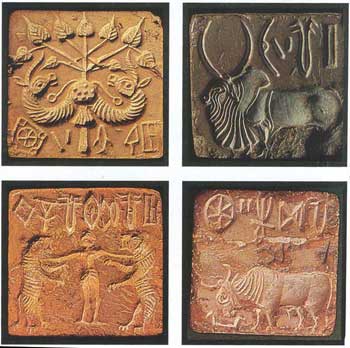
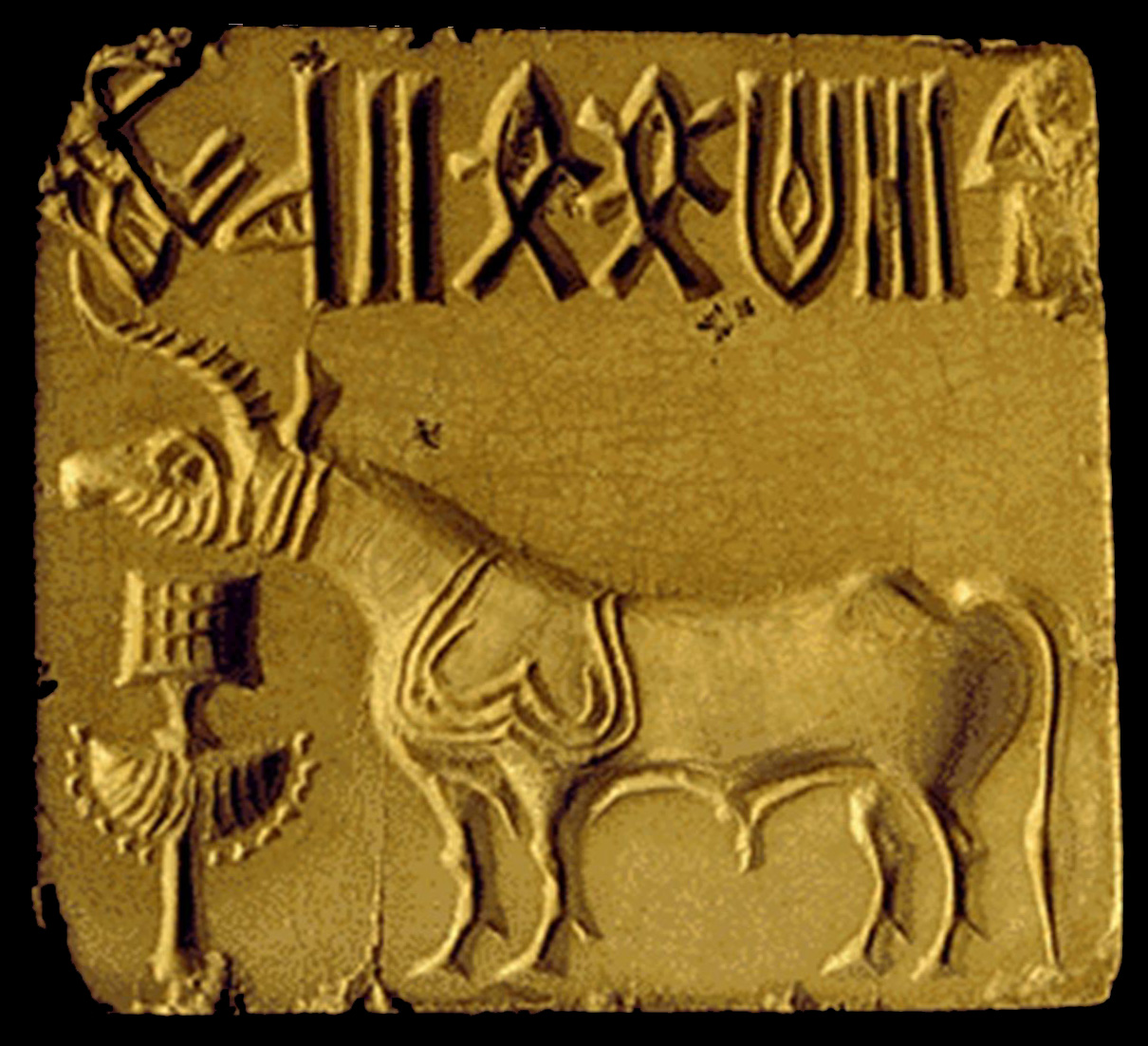
Little is known about the writing system of the Indus Valley civilization.
Scholars have not been able to read the symbols found on stone seals and pottery. 

Crash Course Video: The Indus Valley Civilization  Finally, let's get the Crash Course take on the Indus Valley Civilization. Watch the video carefully because it will be used tomorrow as part of an EDpuzzle assessment. 


Homework  Complete the Indus Valley Civilization - Cloze Reading Activity, The Indus Valley Civilization - Cognitive Content Dictionaryand the South Asia Map assignment, all of which are due Friday, February 24.

Tuesday, February 21, 2017

Ancient India: The Indus Valley Civilization

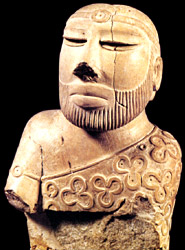
One of the few surviving artifacts depicting what people of the Indus Valley may have looked like.

 Today's Focus Question  How did people live in the first Indus Valley civilization?


The Indus Valley Civilization: Vocabulary Study  Today we will begin learning about the Indus Valley civilization of ancient India by studying some of the key vocabulary related to this remarkable civilization, using the document The Indus Valley Civilization - Cognitive Content Dictionary, which can be found in your Social Studies Google ClassroomWe will be using an excerpt from our Social Studies textbook, which has  also been placed in your Social Studies Google Classroom (and which you can find here), to help us understand the lesson's key words and concepts. Some images have also been posted below to help you conceptualize these new terms.

Young kids rely on their parents.
The organization of Indus Valley cities is clear evidence of central planning.
Food surpluses were stored in the granary
We import a lot of goods from China.
U.S. exports are being shipped to foreign nations. 
Buildings can collapse.
Civilizations can collapse too.

Homework  (1.) Complete the South Asia Map assignment, which is due Friday, February 24. (2.) Complete the assignment The Indus Valley Civilization - Cognitive Content Dictionary, which is also due Friday, February 24 

Wednesday, February 15, 2017

Ancient India: Mapping the Geography of South Asia


Mapping Activity: The Geography of South Asia Today you will demonstrate what you have learned about the land, important places, and geographic features in and around the Indian subcontinent, by labeling a blank image of the region (similar to the one featured above). In your Social Studies Google Classroom you can find the assignment Map of South Asia. Directions for how to complete the activity are included with the assignment. 

You may utilize various resources to help you complete the activity. The maps below, featured in our Social Studies textbooks and found online, I find particularly helpful. 


This mapping activity builds upon content that we have studied in class and serves as one way to demonstrate what you have learned about the geography of ancient India and South Asia. Therefore, it will count towards your Social Studies assessment grade. This assignment will be due on Wednesday, February 22.

Thursday, February 9, 2017

Ancient India: The Geography of South Asia

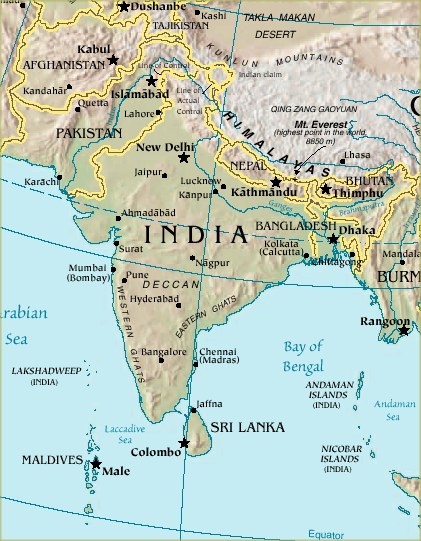
The Indian Subcontinent 

 Today's Focus Question  How did the geography affect life in India?


Introduction to the Geography of South Asia: Writing Warm-Up  Study the image above. What do you see? What do you notice about the geography of this part of the world? What geologic features are apparent? What do imagine the climate  to be like there? Share your observations on the Google Form here

The Geography of South Asia: Vocabulary Study  Today we start a new unit on the early civilizations of India. We will begin by learning about the geography of this part of the world, and today we will specifically study some of the key vocabulary related is geography, using the document The Geography of South Asia - Cognitive Content Dictionary, which can be found in your Social Studies Google ClassroomWe will be using an excerpt from our Social Studies textbook, which has been placed in your Social Studies Google Classroom as well (and which you can also find here), to help us understand the lesson's key words and concepts. Some images have also been posted below to help you conceptualize these new terms.
  
The Indian subcontinent is very large.
The Himalaya mountains are a natural barrier separating India from China.
The blue lines represent the Indus river system.
Watsonville is home to a lot of fertile land.
Monsoons bring wet winds in the summer and dry winds in the winter. 
                   
Homework  Complete The Geography of South Asia - Cognitive Content Dictionary, which will be due on Friday, February 17

Monday, February 6, 2017

The Ancient Hebrews: The Spread of Judaism (Day 2)

The Diaspora of Jews followed the laws and rituals of Judaism wherever they were.


 Today's Focus Question  How did the influence of Judaism spread across time and place? 


The Spread of Judaism: Reading and Notetaking  Today we will continue to learn about the spread of Judaism, with a special focus on the time of judges and kings, the Diaspora, and the legacy of Judaism. You will be taking notes on these important ideas using the Spread of Judaism - Notetaking Study Guide, which can be found in your Social Studies Google Classroom. You have two different sources available to locate pertinent information. You may utilize the relevant section of your Social Studies textbook here, and/or you may reference the excerpt from your Social Studies workbook below. 

Judges could inspire an army of volunteers.

The time of judges came to an end when a warrior named Saul become king. 
After King Solomon's Death, the kingdom of Israel split into two parts.
After being conquered, many Jews were sent into exile

The synagogue allowed Jews to practice their religion wherever they were in the world. 
Yohann ben Zaccai was important for helping to preserve Jewish teaching and learning. 
Judaism introduced the idea of one God to the world. 

Homework  Complete the assignment Spread of Judaism - Notetaking Study Guide, which along with The Spread of Judaism - Cognitive Content Dictionary, will be due on Friday, February 10

Thursday, February 2, 2017

The Ancient Hebrews: The Spread of Judaism


 Today's Focus Question  How did the influence of Judaism spread across time and place? 


Build Background Knowledge: The Spread of Judaism  Have you ever moved? Do you know anyone who has moved? Did you take your beliefs, thoughts, and memories with you when you moved? Do you think the Jewish people took took their beliefs, thoughts, and memories with them when they moved? Do you think that this is a way in which Judaism spread? Let's start to explore these ideas today. 

The Spread of Judaism: Vocabulary Study  First, we will study the key vocabulary related to the spread of Judaism, using the document The Spread of Judaism - Cognitive Content Dictionary, which can be found in your Social Studies Google ClassroomWe will be using an excerpt from our Social Studies textbook, which has  been attached to your assignment in your Social Studies Google Classroom (and which you can also find here), to help us understand the lesson's key words and concepts. Some images have also been posted below to help you conceptualize these new terms.

Deborah was a judge (and not in courtroom) who inspired an army to win a great battle.

In addition to being a king of the Israelites, David was also the author of many psalms (or religious songs).

There were several times in history in which the Jews rebelled against those that sought to conquer them.

But there were also many times in history in which thew Jews were exiled from their homeland. 

Communities of Jews living away from their homeland made up the Diaspora


The synagogue is where many Jews go to worship God. 
Homework  Complete the assignment The Spread of Judaism - Cognitive Content Dictionary, which is due on Friday, February 10 

Wednesday, February 1, 2017

Mapping Ancient Hebrew History


Mapping Ancient Hebrew History  Now let's turn our attention to mapping ancient history. Through our studies of the ancient Hebrews we have learned that migration is an important part of their story. This is clearly evident in Abraham's journey from Mesopotamia to the "promised land" of Caanan, the move to Egypt to escape famine, and the subsequent  Exodus, in which Moses led the Hebrews out of Egypt to the Sinai Peninsula.

Today I would like you to utilize the Ancient History Layer of your Social Studies World Map to pin some of the significant locations in early Hebrew history, explain their significance, and to track the migration of Hebrews between these places. UrHaranCanaanEgypt, and Mount Sinai, for example, are all places that should be identified on your map. What happened at these locationsYou should include a title for the event, the date(s) the event took place, a brief summary of what happened, and include an appropriate photo or video. Next, try using the 'Draw a line' function on your Google Map to show the routes of Hebrew migration. Several maps and excerpts from your Social Studies textbook have been provided below to support you in your project. 


Screen Shot 2014-11-10 at 8.33.45 AM.pngScreen Shot 2014-11-10 at 8.33.52 AM.png
 Screen Shot 2014-11-10 at 8.34.07 AM.png 
Screen Shot 2014-11-10 at 8.34.16 AM.png