Tuesday, November 29, 2016

Egyptian Pharaoh Study: Ramses II


 Today's Learning Objective    Understand the significance of Ramses the Great

Warm-Up: What makes a great leader?  Today I want you to consider what makes a leader great? What qualities do great leaders possess? What do great leaders do? Can you think of any examples of great leaders? Share your ideas in your Social Studies Google Classroom

Examining Ramses II from Multiple Sources  Ramses II is considered by many to be the greatest leader in Ancient Egypt's history. But was he? In order to understand his significance we will be consider Ramses using multiple sources. We will examine a section from our Social Studies textbook, a primary source that includes Ramses's own words, a short documentary video, and finally a Powerpoint presentation designed by a teacher. By examining a text set composed of a variety of sources, my hope is that you will develop a more comprehensive understanding of this complex and remarkable figure from history.

You will use the document Ramses II Notes located in your Social Studies Google Classroom to document the important things you learn about him and his reign. 

We will begin by reading an excerpt from our Social Studies textbook below.    

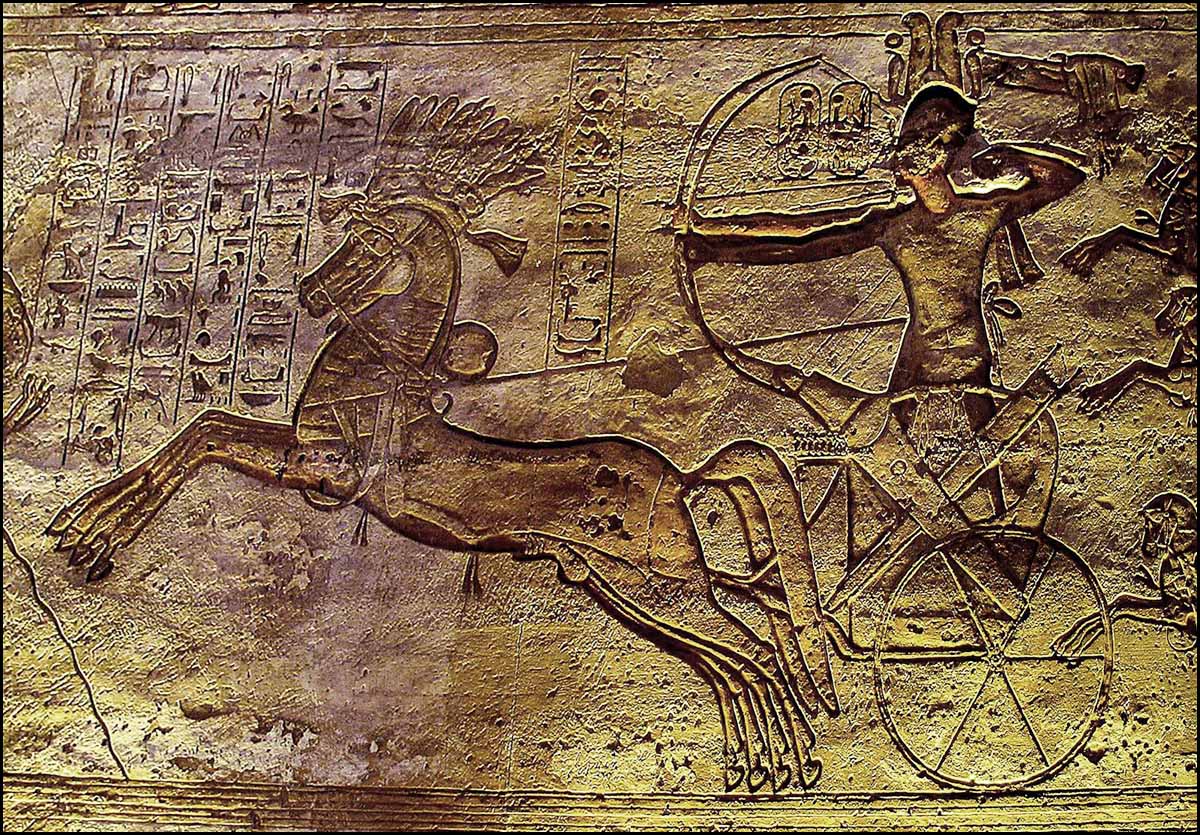
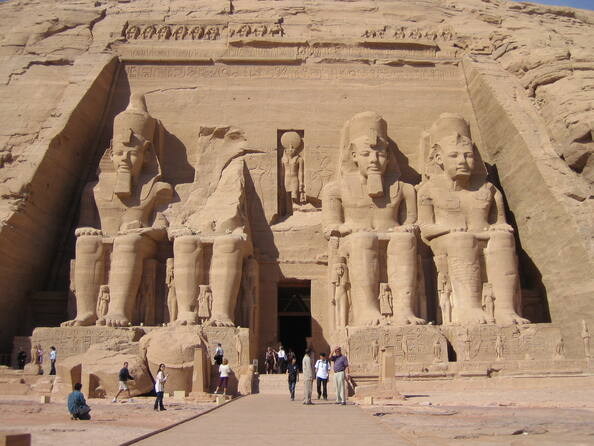
Abu Simbel


Now we will read Ramses's own words (an example of a primary source), in which he blames his own troops for the failures of the Battle of Qadesh.


Ramses the Great and the Battle of Qadesh 

Next, we will watch a video that takes a critical look at Ramses and cast him as essentially a propagandist who built shrines and monuments in his honor as a way of covering up his own failures. Is this a fair perspective?    


Finally, let's check out a PowerPoint presentation designed by a fellow teacher, which tries to take a more balanced view of Ramses II. 

Monday, November 28, 2016

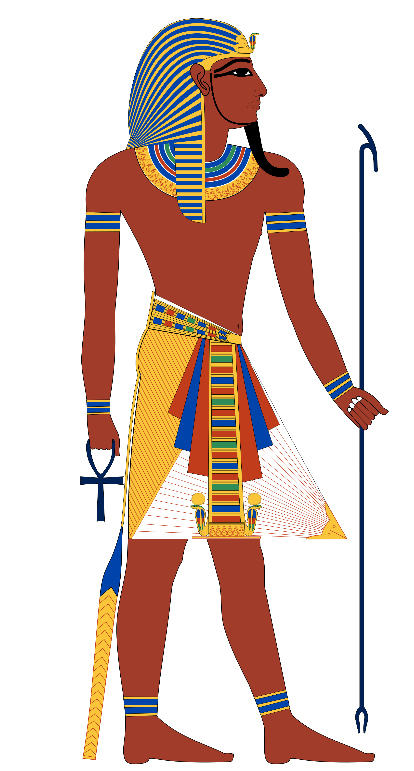
Egyptian Pharaoh Study: Hatshepsut


 Today's Learning Objective    Understand the significance of Queen Hatshepsut 

Warm-Up: Video of the Day  Watch the video below about the growth of human population over the last 100,000 years. What observations can you make? What are the implications, if any, of this for the way we live now and the future of your planet? 


Examining Hatshepsut from Multiple Sources  Queen Hatshepsut was one of the most important leaders in Ancient Egypt's history. In order to understand her significance we will be consider Hatshepsut using multiple sources. We will examine a section from our Social Studies textbook, an excerpt from the book Hathshepsut: His Majesty, Herself, a primary source document that includes Hatshepsut's own words, a short documentary video, and finally a poem. By examining a text set composed of a variety of sources, my hope is that you will develop a more comprehensive understanding of this remarkable figure from history.

You will use the document Hatshepust Notes, located in your Social Studies Google Classroom, to document the important things you learn about her and her reign. 

We will begin by reading an excerpt from our Social Studies textbook below.    
Now we will read an excerpt from the book Hathsepsut: HIs Majesty, Herself, which focuses on what Hatshepsut did in order to be accepted as pharaoh by the Egyptian people. 


Next, we will examine a primary source. A primary source is a document or physical object which was written during the time under study. The words below are said to be Hatshepsut's  and come directly form an obelisk (an Egyptian monument) inscription created during her reign. What do we learn about Hatshepsut from her actual words? Should this source carry more weight than others? 


Next, check out the short documentary video about Hatshepsut below. 


Finally, read this poem by Ruth Whitman written from the perspective of Hatshepsut. 


HATSHEPSUT:


Before my father came to the throne  


there was chaos in our double kingdom- 


from the Great Green Sea on the north  


to the land of Nubia on our south.


Men without breasts love war.  


They measure their height


by the mountains of severed hands  


piled up, cut from their enemies.


But I saw our land laid out in peace:  


Thebes, the southern city, the horizon of earth  


stretching east to west


and the fecund river cleaving the land


south to north.  


Sun and moon


sail from east to west


across the Nile,


from life to death


and back again.


Symmetry. Order.  


The Nile


floods, recedes, floods.


And over us stretches Nut, 


the goddess who is the sky. 


The sun travels by night 


through her body,


the moon and stars by day. 


Her toes touch the east,


her fingers reach to the west, 


she arches over us,


rainbow mother of night and day.

Homework  (1.) Complete the Egypt Under the Pharaohs - Cognitive Content Dictionary and Authority Under the Pharaoh assignments, all of  which are due Friday, December 2(2.) Continue working on the Hatshepsut Notes assignment, which is due Friday, December 2.

Tuesday, November 22, 2016

Egypt Under the Pharaohs: Guided Reading

 Today's Focus Question  How did the pharaohs gain authority over a large kingdom? 


Guided Reading: Egypt Under the Pharaohs  Today we are going to read about how the pharaohs, or rulers of Egypt, were able to gain the authority to rule over Egypt. Where did this assumed power come from? How were a succession of pharaohs able to maintain control of Egypt for so long? As we read excerpts of your Social Studies workbook below, you will use the document Sources of Pharaoh's Authority, which is located in your Social Studies Google Classroom, to take notes on this topic. 


Homework  Complete the assignment Sources of Pharaoh's Authority by Friday, December 2

Monday, November 21, 2016

Egypt Under the Pharaohs: Vocabulary Study


 Today's Focus Question  How did the pharaohs gain authority over a large kingdom?


Egypt Under the Pharaohs: Vocabulary Study  Today we will study the key vocabulary related to the leaders and governing of Ancient Egypt, using the document Egypt Under the Pharaohs - Cognitive Content Dictionary, which can be found in your Social Studies Google ClassroomWe will be using an excerpt from our Social Studies textbook, which can also be found in your Social Studies Google Classroom (as well as here) to help us understand the lesson's key words and concepts. This assignment will be due Friday, December 2

Friday, November 18, 2016

Current Event Friday

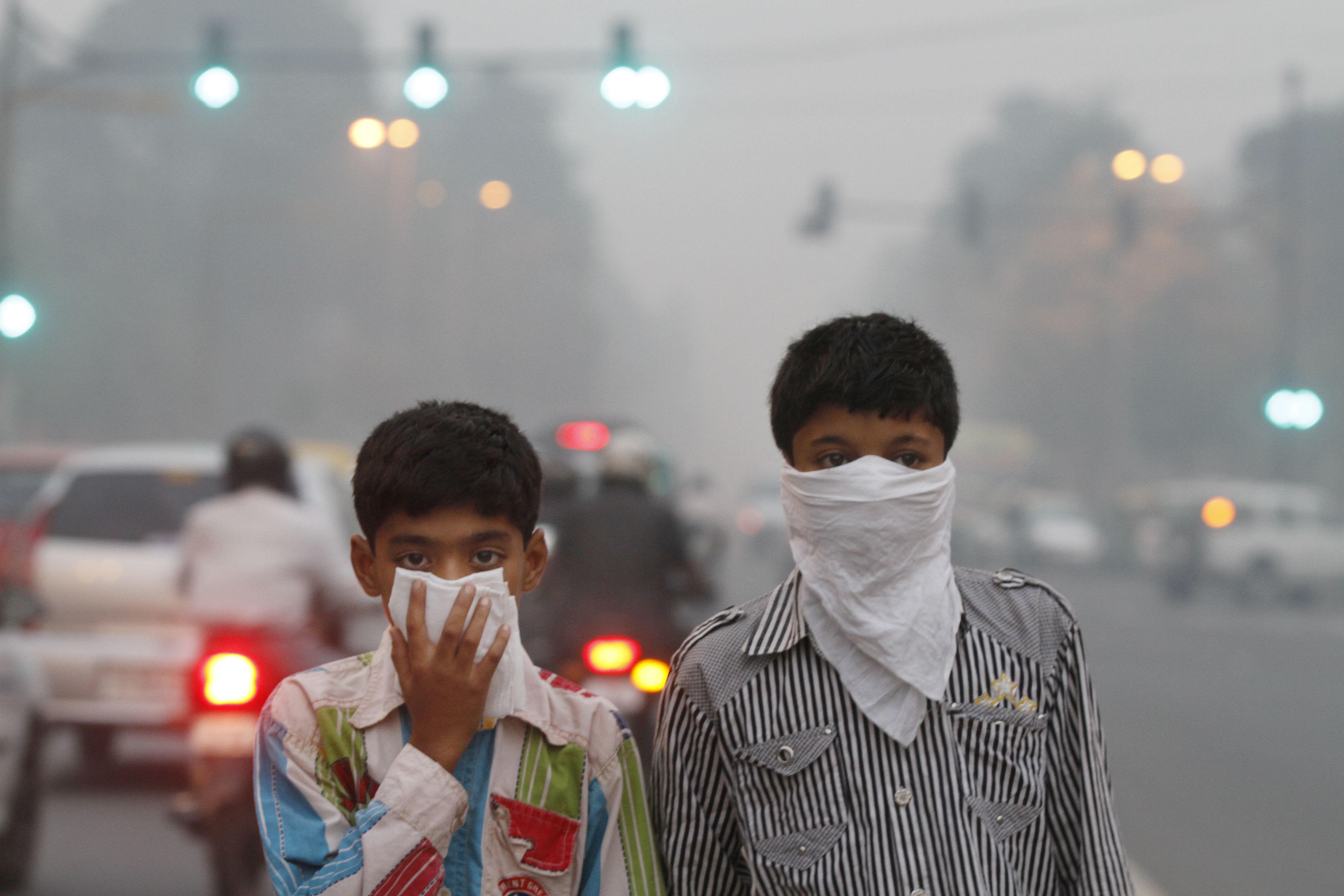
Watch this week's 'The Week in Rap' to find out what's happening in New Delhi, India. 


Adding to Our Social Studies Google Map  First, today we are going to pin the current event story you researched most recently, as part of the "Current Events" layer of your Social Studies Events Map. Follow the steps: pin event in its proper geographic location, add a title, include the text from your current event summary, post a related image, and consider including a specialized icon for your pin.

Flocabulary: The Week in Rap  Many important news events took place around the world this week. Let's review some of them with our friends at Flocabulary.


Researching and Summarizing a Current Event  This week Flocabulary rapped about air pollution in India, kids suing the government over climate change, diverse women winning important seats in the U.S. Senate, a rise in hate crimes since the presidential election, the talent and speed of female Japanese basketball players
and a study about ticklish rats

Your objective is to select the story the most interests you, click the link for additional information, take notes, and then write a current event summary. Locate the document Current Event Notes and Summary in your Social Studies Google Classroom. This assignment will be due Friday, December 2 

Thursday, November 17, 2016

Mapping Egypt Activity and Exploring Egyptian Pharaohs


Appropriate Behavior with the Substitute  I'm sorry I couldn't be with you today. I fully expect you to be on your very best behavior with your substitute today. Please stay in your seats, stay focused on the work outlined here on the Blog, and, most importantly, treat your substitute with decency and respect. Remember, I can monitor your computer use and expect to see that you focused on your assignments and not goofing around. If you don't have a working Chromebook today, partner up with someone in your group and work with them. I expect to receive a positive report form the substitute upon my return. Students that choose to not to be their best selves today may receive serious consequences upon my return. Have a great day!

Mapping Ancient Egypt Activity  Today is your last class day to work on your map of Ancient Egypt. You can still find the assignment Map of Ancient Egypt in your Social Studies Google ClassroomRemember that directions for how to complete the activity are included with the map. 

Exploring Egyptian Pharaohs  If you completed your Ancient Egypt Map, and are ready to continue your exploration of Ancient Egypt, consider an independent investigation of what it meant to be a pharaoh. Tomorrow we will officially learn as a class that the pharaoh was essentially the ruler of Egypt, but today why don't you explore who some of the various pharaohs were over the course of Egyptian history, what their responsibilities were, and what their lives were like. 

The British Museum's Ancient Egypt site has a great section dedicated to the pharaohs here. After reading some background about pharaohs, you can read a story about one of Ancient Egypt's greatest pharaohs Ramses II here. Next, explore Egyptian wall art featuring Ramses II here. Another great resource is the Discovering Egypt site, which has a whole area dedicated to Ancient Egyptian Kings & Kings

Homework  Complete your Map of Ancient EgyptThe Nile River Valley - Cognitive Content Dictionary, and The Nile River - Notetaking Study Guide which are all due tomorrow, Friday, November 18 

Tuesday, November 15, 2016

Mapping Ancient Egypt


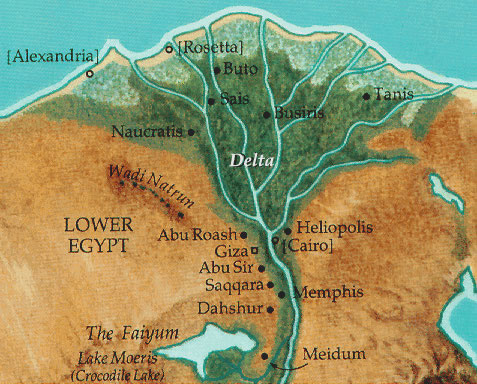
Mapping Ancient Egypt Activity  Today you will demonstrate what you have learned about the land, important places, and geographic features in and around Ancient Egypt, by labeling a blank map of the region. In your Social Studies Google Classroom you can find the assignment Map of Ancient Egypt. Directions for how to complete the activity are included with the map. 

You may utilize various resources to help you complete the activity. The map below, featured in our Social Studies textbooks, I find particularly helpful. The British Museum's Egypt site also features various maps of Egypt here. Also, some really nice maps of Ancient Egypt can be found here.  

This mapping activity builds upon things that we have studied in class and serves as one way to demonstrate what you have learned about the geography of Ancient Egypt. Therefore, it will count towards your Social Studies assessment grade. Your Map of Ancient Egypt will be due on Friday, November 18

Monday, November 14, 2016

Ancient Egypt: The Nile River Valley (Day 2)


 Today's Focus Question  How did the Nile River affect where people settled in Ancient Egypt?


Warm Up: Adventure on the Nile River  Today you will begin your day at the British Museum's Egypt website here. Your task is to accompany an ancient Egyptian boy from a farming family as he navigates the Nile River. You will help the boy make important decisions about how and where he travels. His survival may ultimately be in your hands. Pay attention to the details of ancient Egypt's geography along the way. 

Guided Reading: The Nile River Valley  Now we will read from the textbook section "The Nile River Valley". The reading selection can be found digital form in your Social Studies Google Classroom, on pages 96-99 of your Social Studies textbooks, and at the link here

As you read, you will record key information from the section using the document The Nile River Valley - Notetaking Study Guide, which can also be found in your Social Studies Google Classroom.

Map of Ancient Egypt, featuring Lower and Upper Egypt


The kings of Upper Egypt work white crown, while the kings of Lower Egypt wore red.

Lower and Upper Egypt were often at war with each other.

According to legend, King Menes was the two kingdoms into one, in about 3100 B.C. The ruler of the combined kingdom wore a double crown of red and white, and was known as the "Lord of the Two Lands." 

Homework  Complete The Nile River - Notetaking Study Guidewhich will be due this Friday, November 18.  

Tuesday, November 8, 2016

Ancient Egypt: The Nile River Valley


 Unit Focus Question  How did the Ancient Egyptians create a brilliant and long-lasting civilization in a desert land?


 Today's Focus Question  How did the Nile River affect where people settled in Ancient Egypt?


Video: "Nile"  To begin today, we will watch a short video about life in Ancient Egypt, with a special focus on the importance of the Nile River. 


The Nile River: Vocabulary Study  Next, we will study the key vocabulary related to the geography of Ancient Egypt, using the document The Nile River Valley - Cognitive Content Dictionary, which can be found in your Social Studies Google ClassroomWe will be using an excerpt from our Social Studies textbook, which accompanies the Cognitive Content Dictionary (and which you can also find here), to help us understand the lesson's key words and concepts.


Map of Ancient Egypt
Egypt's Black Land and Red Land
Map of Lower Egypt and the Nile Delta
Nile River Cataract
Satellite Image of Egypt 

Homework  Complete The Nile River Valley - Cognitive Content Dictionary, which is due Friday, November 18.

Monday, November 7, 2016

CNN Student News and Researching and Summarizing a Current Event

Women will be allowed to participate in the Mavericks surf competition this year.
Might this me your chosen current event of the week? 


CNN Student News  Let's begin today with a new edition of CNN Student News. You may want to include a story from today's segment or from last week's "The Week In Rap" as the current event you research and summarize and ultimately include on your Social Studies Events Map

Researching and Summarizing a Current Event  This past week Flocabulary's "The Week In Rap" and today's edition of CNN Student News featured stories about the end of the app Vine, how listening to music may help improve HIIT (High-Intensity interval training) workouts, Maverick's surfing competition which will include women for the first time in 17 years, the Chicago Cubs winning their first World Series in 108 yearsa study that show Lyft and Uber have discriminated against black passengers, the FBI concluding no new action against Hillary Clinton for her emails, how Daylight Saving Time can cause seasonal depression, and the New York City marathon

Your objective is to select the story the most interests you, click the link for additional information, take notes, and then write a current event summary. Locate the document Current Event Notes and Summary in your Social Studies Google Classroom. This assignment will be due Thursday, November 10.

Homework  Continue working on your Current Event Notes and Summary, which will be due Thursday, November 10. 

Friday, November 4, 2016

Ancient Egypt Webquest and Current Events

Which current event news story will you research? Perhaps, the Chicago Cubs
winning the World Series for the first time in 108 years? 


Ancient Egypt Webquest  Today we will continue working on the Ancient Egypt Webquest, which can be found here. Remember you are acting as an online Egyptologist, being sent all over the Internet, to gather information about this important and supremely interesting civilization. You will continue to record your findings using the document Ancient Egypt Webquest, which is located in your Social Studies Google Classroom. This assignment is due next Thursday, November 10

Flocabulary: The Week in Rap  Many important news events took place around the world this week. Let's review some of them with our friends at Flocabulary.

CNN Student News  Now let's head over to CNN Student News. On Monday, you will be tasked with selecting one news story from either "The Week in Rap" or "CNN Student News" to research, summarize, and pininpoint geographically and place on the Current Event layer of your Social Studies World Map via Google Maps. 

Thursday, November 3, 2016

From Mesopotamia to Egypt


Warm-Up: What Do We Know and Want to Know About Ancient Egypt?  Welcome to the beginning of our unit on Ancient Egypt. Before we jump into the content, I would like you to reflect on what you already know about Egypt and the ancient Egyptians. Additionally, what do you want to know? What do you hope to learn about as we study Ancient Egypt? Share your prior knowledge and questions on your class's Padlet wall (Period 2 and Period 4).

Ancient Egypt Webquest  Today we will be working on an Ancient Egypt Webquest, which can be found here. You will be acting as an online Egyptologist, being sent all over the Internet, to gather information about this important and supremely interesting civilization. You will record your findings using the document Ancient Egypt Webquest, which is located in your Social Studies Google Classroom.  Good luck and have fun! This assignment will be due next Friday, November 11

Homework  (1.) Continue working on your Ancient Egypt Webquest, which is due next Friday, November 11. (2.) Complete the You Be the Judge: Hammurabi's Code assignment, which is due tomorrow, Friday, November 4

Wednesday, November 2, 2016

Mesopotamia Quiz

Assessment: Mesopotamia Quiz  Show me what you have learned about the geography and early civilizations of Mesopotamia so far by taking the quiz below. I will read you the questions and answers aloud, and then provide you time to finish. If you finish early, you may silent read or work on one of your digital assignments.