Today's Focus QuestionWhat impact did the Aryans have on ancient and modern India?
India's Vedic Age: Vocabulary StudyToday we
are continuing to learn about the early civilizations of India, though our focus shifts to a group of people known as the Indo-Aryans who lived
during a time known as India's Vedic Age. We will begin by studying
some of the key vocabulary related this topic, using the document India's Vedic Age - Cognitive Content Dictionary, which can be found in your Social Studies Google Classroom. We
will be using an excerpt from our Social Studies textbookcan also be found in your Social Studies Google Classroom (and which you can find here as well), to help us understand the lesson's key words and concepts. Some images have also been posted below to help you conceptualize these new terms.
The Vedas are considered to be very sacred to the Hindu people.
Your caste is a group you are born into.
The caste system separates members of Indian society
India's untouchables often did the dirty jobs that no one else would do.
CNN Student News As we watch CNN Student News today, identify one or two news stories that you can pinpoint geographically and place on the Current Event layer of your Social Studies World Map via Google Maps.
Iowaand Atlanta, Georgiawere both featured in today's segment. After
pinning at least one of these places on your map, consider the most
important question: What happened here? You should include a title for the event, the
date(s) the event took place, a brief summary of what happened, and
include an appropriate photo or video. If you need to refer to a transcript of today's broadcast you can find it here.
Since it's the end of the week, let's now put your knowledge of recent current events to a test. You may either take the quiz independently or with a partner. High score wins a small prize. Good luck!
HomeworkComplete India's Vedic Age - Cognitive Content Dictionary, which will be due on Friday, February 5.
CNN Student News and Current Event Mapping As we watch CNN Student News today, identify one or two news stories that you can pinpoint geographically and place on the Current Event layer of your Social Studies World Map via Google Maps.
Denmark; Tunisia; Libya; Yemen;Syria; Germany; Japan; and Alabamawere all featured in today's segment. After
pinning at least one of these places on your map, consider the most
important question: What happened here? You should include a title for the event, the
date(s) the event took place, a brief summary of what happened, and
include an appropriate photo or video. If you need to refer to a transcript of today's broadcast you can find it here.
Mapping the History of the Indus ValleyNow
let's turn our attention to mapping ancient history. Today I would like you to utilize the Ancient History Layer of your Social Studies World Map to pin some of the significant locations of the Indus Valley civilization of ancient India. The Indus Valley citiesHarrapa and Mohenjo-Darroare both places, for example, that should be identified on your map. What happened at these locations? You should include a title, relevant
dates, a brief summary of what happened there, and
include an appropriate photo or video. An image and link to the BBC site about the cities of the Indus Valley civilization have been provided below for reference.
Additional information about the Indus Valley cities Harrapa and Mohenjo-Daro can be found on Mr. Dowling's history website here.
CNN Student News and Current Event Mapping As we watch CNN Student News today, identify one or two news stories that you can pinpoint geographically and place on the Current Event layer of your Social Studies World Map via Google Maps.
Washington, D.C.; Hong Kong; Taiwan; the South Korean island of Jeju;southern China; the Japanese island of Amami Oshima; and Saddle Brook, New Jerseywere all featured in today's segment. After
pinning at least one of these places on your map, consider the most
important question: What happened here? You should include a title for the event, the
date(s) the event took place, a brief summary of what happened, and
include an appropriate photo or video. If you need to refer to a transcript of today's broadcast you can find it here.
Edpuzzle Video Assessment: The Indus ValleyToday
you will demonstrate some of what you've learned about the Indus Valley
Civilization by completing a mini-video assessment throughEDpuzzle.
After the clicking the link, click "Login," "Student," and then "Sign
in with Google." Once
you're logged in, locate the Social Studies video "Indus Valley
Civilization: Crash Course." This is the same video we watched as a
class yesterday and will cover some of the same things you have been
learning about this week. If you have headphones, use them. As the video
progresses, it will stop periodically and ask you a question. You must
answer the question in order to proceed. Your score on this activity
will count towards your assessment grade in this class. If you don't finish your EDpuzzle in class today, please complete it by Friday, January 29.Good luck! Homework(1.)Complete your Indus Valley EDpuzzle Assessment by Friday, January 29.(2.)Remember to complete the Indus Valley Civilization - Cloze Reading Activity andThe Indus Valley Civilization - Cognitive Content Dictionary, both of which are also dueFriday, January 29.
Today's Focus QuestionHow did people live in the first Indus Valley civilization?
The Indus Valley Civilization: "Into" Video CivilizationBefore
we read about the Indus Valley Civilization, we are going to watch a
short computer-generated video that I think will help you better
visualize what life may have been like for people living during this
time.
The Indus Valley Civilization: Interactive Website and Cloze Reading ActivityToday you are going to have an opportunity to explore an interactive and engaging website about the Indus Valley civilization and its people. The site hosted by the BBC can be found here.As you can see by the image below the site is organized into several different categories of information. As you explore each one, I want you to take notes using the Indus Valley Civilization - Cloze Reading Activity, which can be found in your Social Studies Google Classroom. Make sure to fill in the blanks with the pertinent information.
Below you can also find a series of images to better help you understand the geography and economy of the Indus Valley civilization and the daily lives of its people.
Like the Nile River Valley, the Indus Valley was surrounded by desert and
included a river flooded each year, bringing forth rich soil and the threat of floods.
Indus Valley cities were well organized, which must have been the result of central planning.
Indus Valley homes included a bathroom, a toilet, a sewage system, and a trash chute.
The Indus Valley economy was based on farming and trade. Traders imported and exported a variety of goods.
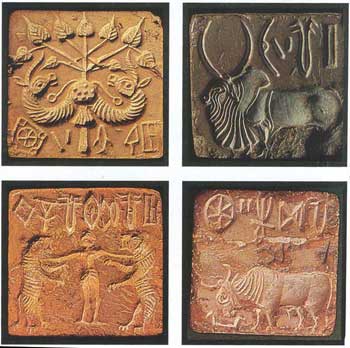
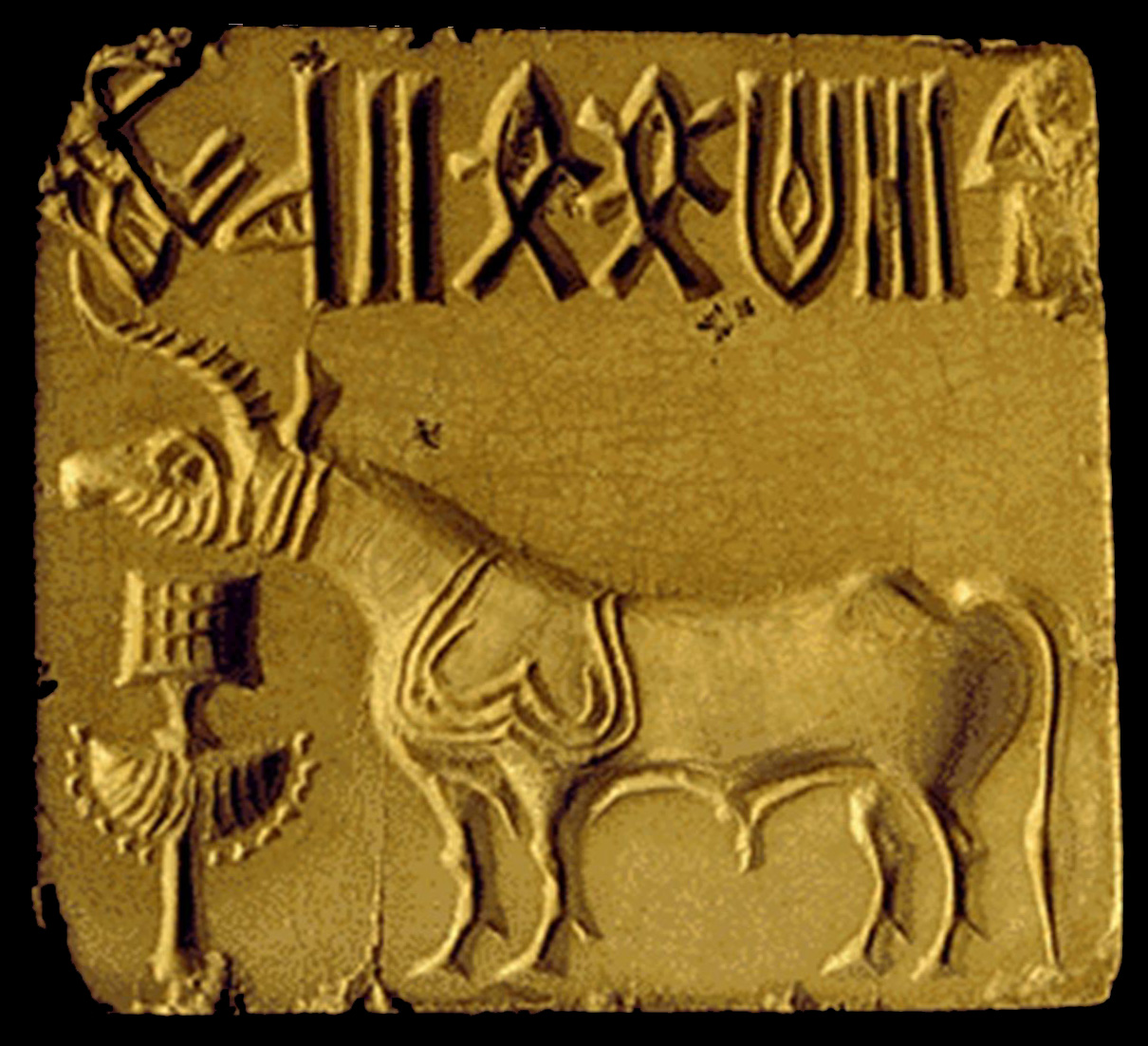
Little is known about the writing system of the Indus Valley civilization.
Scholars have not been able to read the symbols found on stone seals and pottery.
Crash Course Video: The Indus Valley CivilizationFinally,
let's get the Crash Course take on the Indus Valley Civilization. Watch
the video carefully because it will be used tomorrow as part of an
EDpuzzle assessment.
HomeworkComplete the Indus Valley Civilization - Cloze Reading Activity andThe Indus Valley Civilization - Cognitive Content Dictionary, both of which are dueFriday, January 29.
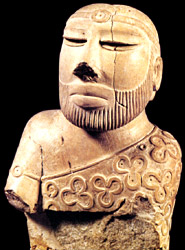
One of the few surviving artifacts depicting what people of the Indus Valley may have looked like.
Today's Focus QuestionHow did people live in the first Indus Valley civilization?
CNN Student News and Current Event Mapping As we watch CNN Student News today, identify one or two news stories that you can pinpoint geographically and place on the Current Event layer of your Social Studies World Map via Google Maps.
Northwest Pakistan; Northeast United States; and Missoula, Montanawere all featured in today's segment. After
pinning at least one of these places on your map, consider the most
important question: What happened here? You should include a title for the event, the
date(s) the event took place, a brief summary of what happened, and
include an appropriate photo or video.
The Indus Valley Civilization: Vocabulary StudyToday
we will begin learning about the Indus Valley civilization of ancient
India by studying some of the key vocabulary related to this remarkable
civilization, using the document The Indus Valley Civilization - Cognitive Content Dictionary, which can be found in your Social Studies Google Classroom. We
will be using an excerpt from our Social Studies textbook, which has
also been placed in your Social Studies Google Classroom (and which you can find here), to help us understand the lesson's key words and concepts. Some images have also been posted below to help you conceptualize these new terms.
Young kids rely on their parents.
The organization of Indus Valley cities is clear evidence of central planning.
Food surpluses were stored in the granary.
We import a lot of goods from China.
U.S. exports are being shipped to foreign nations.
Buildings can collapse.
Civilizations can collapse too.
Homework(1.) Complete the assignments South Asia Map and the Geography of South Asia - Notetaking Study Guide, both of which are duetomorrow, Friday, January 22.(2.) Complete the assignment The Indus Valley Civilization - Cognitive Content Dictionary, which will be duenextFriday, January 29.
Mapping Activity: The Geography of South AsiaToday
you will continue to demonstrate what you have learned about the land,
important places, and geographic features in and around the Indian
subcontinent, by labeling a blank image of the region using the
assignment Map of South Asia (which can still be found in your Social Studies Google Classroom). Remember
the directions for how to complete the activity are included with the
assignment. Maps and geography resources of the region can be accessed
in yesterday's Social Studies blog entry.
HomeworkComplete the Map of South Asia, which is duethis Friday, January 22.
Mapping Activity: The Geography of South AsiaToday
you will demonstrate what you have learned about the land, important
places, and geographic features in and around the Indian subcontinent,
by labeling a blank image of the region (similar to the one featured
above). In your Social Studies Google Classroom you can find the assignment Map of South Asia. Directions for how to complete the activity are included with the assignment.
You
may utilize various resources to help you complete the activity. The
maps below, featured in our Social Studies textbooks and found online, I
find particularly helpful.
This
mapping activity builds upon content that we have studied in class and
serves as one way to demonstrate what you have learned about the
geography of ancient India and South Asia. Therefore, it will count
towards your Social Studies assessment grade. This assignment will be dueonFriday, January 22.
Mahatma Gandhi & Martin Luther King Jr.: An OverviewToday
seems like an ideal day to talk about two of the most important
advocates for civil rights and nonviolence our world has ever seen:
Mahatma Gandhi and Martin Luther King Jr. In light of our unit on India,
Gandhi is a fitting historical figure to discuss, as he raised
awareness about the plight of the untouchables (who we will learn about later), who he referred to as
the "Harijans" or "Children of God." Gandhi went on to lead a nonviolent
movement to free his people from British oppression. Martin Luther King
Jr., whose birthday and national holiday we are celebrating, was
profoundly influenced by Gandhi.
Today as we examine the lives of these
two remarkable men, make note of the parallels in their lives, actions,
and words, as well as some of the differences. Use the Gandhi and King - Venn Diagram, which can be found in your Social Studies Google Classroom, to record important similarities and differences that you discover.
To begin, we will watch a brief presentation of Gandhi's life through the video "The Gandhi Rap" below.
Now let's examine Martin Luther King Jr.'s life though the video reproduction of the book Martin's Big Words.
While watching, do you notice any similarities in the lives of Gandhi
and Dr. King? Similarities in the struggles they endured? In the
messages they promoted?
Looking to learn more about the lives of Mahatma Gandhi and Martin Luther King Jr.? Explore the Gandhi Presentation and the King Presentationfrom the website Gandhi and King,
which honors the life and work of both men. A brief summation from the
site of their similarities and differences can be found below.
Gandhi and King: Speaking Up for NonviolenceThere
are also parallels in the messages of nonviolence that both Mahatma
Gandhi and Martin Luther King Jr. advocated. Let's begin by listening to
a rerecording of a famous speech given by Gandhi in which he speaks
about the need for non-violent protest in order to gain equality.
Watch below as Martin Luther King Jr. makes clear the influence of Gandhi on his own philosophy of nonviolence.
Now
let's read an excerpt from Dr. King's famous "Letter from a Birmingham
Jail" which he wrote while imprisoned for organizing a protest march. As
you read the text, do you notice similarities to Gandhi's message? How
is King's belief in "creative tension" somewhat different than Gandhi's
tactic of non-cooperation?
Are Gandhi and King's Messages of Nonviolence Still Relevant Today?What
can we still learn from Mahatma Gandhi and Martin Luther King Jr.? Are
their messages of nonviolence and peaceful protest relevant in our world
today? How can we apply their goals of tolerance, love, peace, and
equality to the times we live in now? Before you answer these questions,
examine the photographs with captions below.
Gandhi's "March to the Sea" in protest against the British tax on salt (1930).
Martin Luther King leading march from Selma, Alabama, to Montgomery, to protest
the lack of voting rights for Africa Americans (1965).
A peaceful 'Black Lives Matter' rally in Minneapolis, Minnesota (2015).
At least 3.7 million people including more than 40 world leaders marched throughout France last year in
a rally of national unity to honor the 17 victims of a three-day terror spree that took place around the French capital.
Now go to your class's Padlet wall (Period 4 and Period 6) and share your ideas about whether Gandhi and King's ideas are relevant today.
Today's Focus QuestionHow did geography affect life in India?
The Geography of South Asia: Guided Reading and NotetakingToday
we will continue to learn about the geography and climate of South
Asia. You will be taking notes on these important ideas using the The Geography of South Asia - Notetaking Study Guide.
You have two different sources available to locate pertinent
information. You may utilize the relevant section of your Social Studies
textbook here, and/or you may reference the excerpt from your Social Studies workbook below.
The Indian subcontinent and surroundings.
The Hindu Kush mountains blocked South Asia from the north.
The Himalaya mountain range is a natural barrier that cut off South Asia from China.
The first Indian civilizations began in the Indus River valley.
The Ganges River is another important river in India.
The rains brought by the summer monsoons bring relief from the baking heat.
Farming in Asia depended on the monsoon rains.
In the winter, dry winds blow from the land to the sea. In the summer, wet winds blow from the oceans onto the land.
Homework(1.)Complete The Geography of South Asia - Cognitive Content Dictionary, which is duetomorrow, Friday, January 15. (2.) Complete The Geography of South Asia - Notetaking Study Guide, which will be due next week, on Friday, January 22.