Monday, October 31, 2016

Mesopotamia: Hammurabi and Hammurabi's Code


 Today's Focus Question  Who was Hammurabi and what was the significance of Hammurabi's Code? 


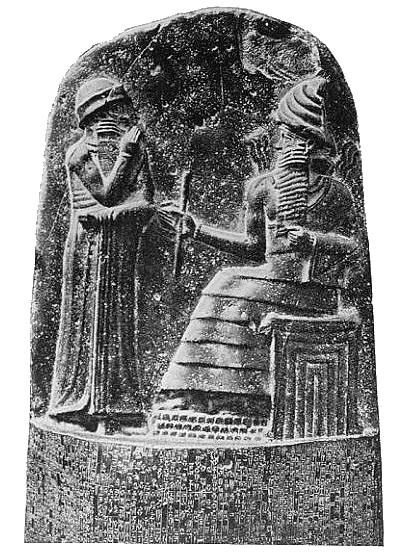
Who was Hammurabi?  According to your textbook, Hammurabi "became king of the city of Babylon around 1792 B.C. For more than 30 years, he built up his army. Then he launched a series of all-out attacks against his rivals. Within a few years he had united Sumer and northern Mesopotamia into a new Babylonian Empire." 

To learn more about Hammurabi, watch the brief video below. 


Hammurabi's Code  Why was Hammurabi's law code so historically significant? To begin to understand, watch the video below. 


Hammurabi's Code Activity  Now you will have an opportunity to examine Hammurabi's code of laws in detail at the website here. You will explore real situations that Hammurabi actually faced. You will then decide what you think to be a fair way to deal with the problem. Finally, you will discover what Hammurabi declared. You will use the document You Be the Judge: Hammurabi's Code, which can be found in your Social Studies Google Classroom.
Homework  Complete the You Be the Judge: Hammurabi's Code assignment, which is due Friday, November 4

Friday, October 28, 2016

Sumerian Civilization Google Mapping and Revisiting the Crisis in Syria


Google Mapping the Sumerian Civilization  Today we are going to pin the historical event summary you researched this week about the Sumerian civilization, as part of the "Historical Events" layer of your Social Studies Events Map. Follow the steps: pin event in its proper geographic location, add a title, include the text from your historical event summary, post a related image, and consider including a specialized icon for your pin. 

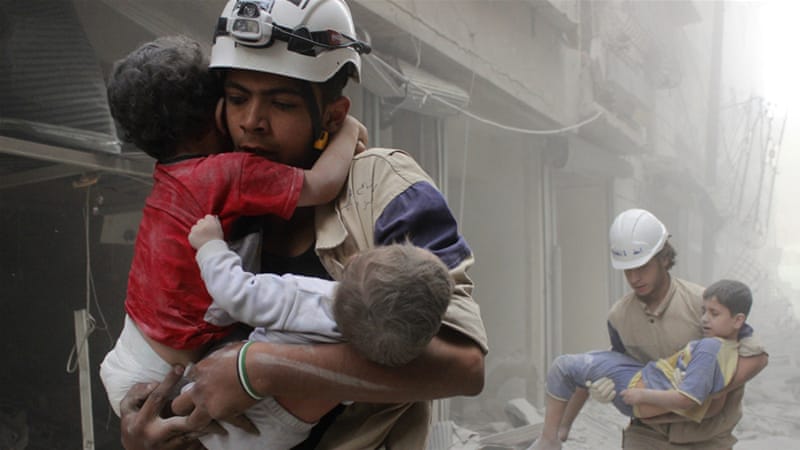
The Crisis In Syria: 'The White Helmets' Documentary  We continue to examine both historical events and current events that have taken place and continue to occur in the Middle East. Today we revisit the evolving crisis in Syria by watching the short documentary The White Helmets about a courageous group of Syrian citizens who risk their lives daily to rescue others. 

If after watching you would like to learn more about the efforts of the White Helmets and show your support for their work, visit the site Support the White Helmets

Thursday, October 27, 2016

Mesopotamia: The First Empires and Summarizing the Civilization of Sumer

Sargon the Great was the first ruler to unite the city-states of Sumer into one empire.


 Today's Focus Question  What is an empire and how did they first develop? 


Flocabulary Video: 'The Fertile Crescent'  Let's review where we've been and where we're going on our journey to understand the region that gave birth to the world's first civilization. Check out the video from Flocabulary below.


The First Empires: Guided Reading  Today we will learn how strong rulers finally conquered Mesopotamia's independent city-states to create the world's first empires. We will read the excerpts from our textbook below.  


Summarizing the Mesopotamian Civilization of Sumer  Earlier this week you researched and gathered essential details about the world's very first civilization, which began in the Middle East region known as Mesopotamia. If you haven't already, it's time organize your information about Sumer in an original summary that you write, and will later become the foundation for the text you include on the historical layer of your Social Studies Events Map.   

For a reminder on how your summary will be assessed, check out the rubric below. 


Homework  Complete the summary component of your Noteaking and Summary Guide (Sumerian Civilization) by tomorrow, Friday, October 28, in order to include it as part of a "pinned story" on your Social Studies Events Map  

Wednesday, October 26, 2016

Mesopotamia: The Legend of Gilgamesh


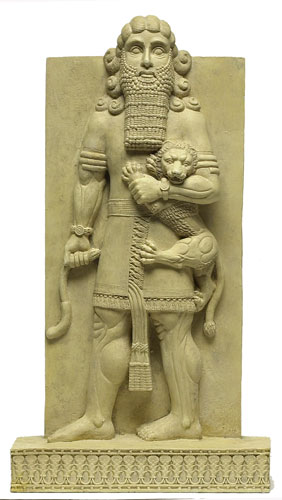
Background on the Story of Gilgamesh  "The story of the god-man Gilgamesh is one of the oldest stories in the world; it was inscribed onto clay tablets over 5,000 years ago in Mesopotamia. There are many versions of the story but the first people who told it were called Sumerians and Gilgamesh was once their king. The people who lived in Mesopotamia discovered many things: irrigation, the wheel, the first codes of law, the 60-minute hour, and most important, writing. Without writing the epic of Gilgamesh would certainly have been lost. The Sumerians, and later other Mesopotamians such as the Akkadians, Babylonians, and Assyrians, wrote the story in cuneiform, the first script in the world." - Ludmila Zeman, Gilgamesh the King 

Read-Aloud: Gilgamesh the King  Today we will be reading together the story Gilgamesh the King, retold and illustrated by Ludmila Zeman. Some consider Gilgamesh to be the world's first literary superhero. As we read, see if you can find any connections or parallels between Gilgamesh and other superheroes you are familiar with.  

The British Museum Website: "Gilgamesh and the Cedar Forest"  Want to explore another tale of Gilgamesh and his adventures? Check out the interactive story of "Gilgamesh and the Cedar Forest" at the British Museum's website here.

Monday, October 24, 2016

The Layers of Middle East History: Examining Mesopotamian Civilization


 Today's Essential Question  * How are ancient areas of the Middle East both different and similar to today? 


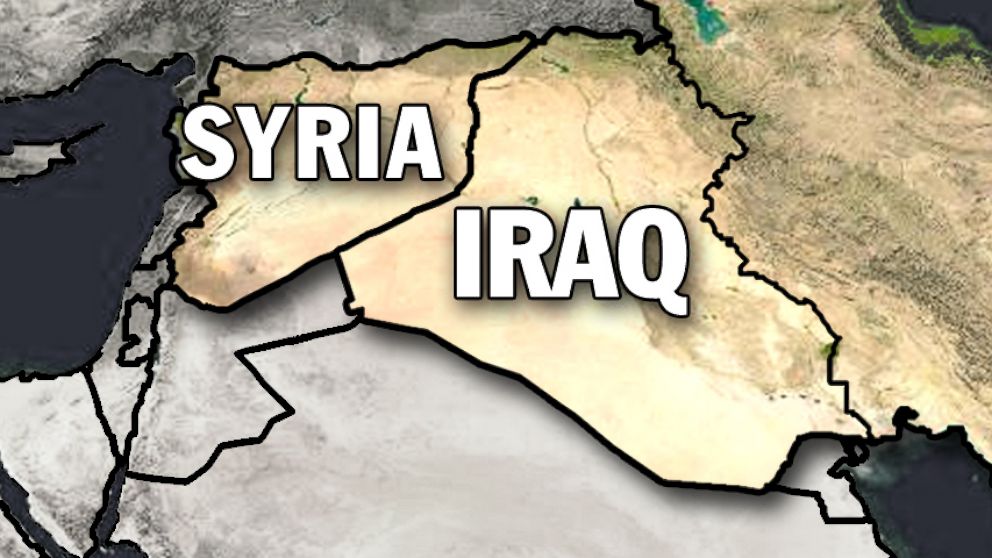
Back to the Past: Examining the Middle East's First Civilization  Last week, as a class we discussed the idea of "layers of history," in which its important when examining a geographic place to look at both its present and its past. In our previous lesson we examined the current crisis in Syria, a country in today's Middle East. Thousands of years before the present civil war in Syria, parts of Syria and neighboring Iraq made up a region known as Mesopotamia. Within Mesopotamia, in what is now southern Iraq, an area known as Sumer saw the birth of the world's very first civilization. 

Today, I want you to imagine that you are going back in time to investigate Mesopotamia's Sumerian civilization. With the same journalistic eye you used to to examine the crisis in modern Syria, your objective is to ask important questions and gather essential details about Sumer to help you better understand this geographic place from history. Ultimately, you will you use the information you compile to write an objective summary about Sumerian civilization, which you will then include as part of a "pinned story" within the historical layer of your Social Studies Events Map. My hope is that you we also begin to make some critical connections between what is happening in the Middle East today and what happened there at the dawn of civilization thousands of years ago. 

To begin, locate the document Noteaking and Summary Guide (Sumerian Civilization) in your Social Studies Google ClassroomAdd some Who, What, When, Where, How, and Why questions that you hope to find the answers to as you begin your investigation.

Video: The Rise of Sumerian Civilization  Now let's begin to find the answers to some of your guiding questions and gather the information you will need to write your summary on Sumerian civilization. Our first source of information will be the video featured below. 


Guided Reading: Mesopotamia's Civilization  Next, let's read together an excerpt from the Social Studies textbook about Mesopotamia's earliest civilization (pages 133-137). You will continue to take notes using your Noteaking and Summary Guide (Sumerian Civilization).

Homework  Complete the Noteaking and Summary Guide (Sumerian Civilization) by Friday, October 28

Friday, October 21, 2016

Current Event Friday

Find out today why Matthew Kaplan is considered to be a CNN Hero. 


A View of Syria In light of learning about the conflict in Syria, I would like to take a moment to bear witness to the destruction that is happening there. The video was taken by drone of the ruins of the besieged city of Aleppo. 

Adding to Our Social Studies Google Map  Today we are going to pin the current event story you researched this week from last week's "The Week in Rap" episode, as part of the "Current Events" layer of your Social Studies Events Map. Follow the steps: pin event in its proper geographic location, add a title, include the text from your current event summary, post a related image, and consider including a specialized icon for your pin.


CNN Student News  As we watch CNN Student News today, identify one or two news stories that you may want to pinpoint geographically and place on the Current Event layer of your Social Studies World Map via Google Maps. 

The European Space Agency; the Philippines; Russia; Arizona; and Bermuda were all featured in today's segment. After pinning at least one of these places on your map, consider the most important question: What happened here? You should include a title for the event, the date(s) the event took place, a brief summary of what happened, and include an appropriate photo or video. If you need to refer to a transcript of today's broadcast you can find it here.

Thursday, October 20, 2016

Google Mapping the Current Conflict in Syria


Google Mapping the Current Conflict in Syria  Now that most of you have finished your summary of the article Growing Up in the World's Most Dangerous Place using the Noteaking and Summary Guide, it's time to begin the Google Mapping component of this project. Follow the steps below. 
  1. If your summary on the crisis in Syria is complete, copy the text of your summary from the Notetaking and Summary Guide Google Doc. 
  2. Locate your Social Studies Google Map. It can be found in your Google Drive or at the Google Maps website. (Once there, click on 'Menu,' 'Your Places,' and then 'Maps.' Click on the desired map and then 'Open in My Maps.') 
  3. Make sure your map is titled Social Studies Google Map
  4. Make sure you have created two layers: "Current Events" and "Historical Events." 
  5. Place a pin on an appropriate geographic location associated with the article "Growing up in the World's Most Dangerous Place," within the Current Events layer. 
  6. Provide an appropriate title for this story/event. 
  7. Paste the text of your summary into the text box for this pin. 
  8. Include an appropriate photo and/or video to accompany the story/event.
  9. Select a pin icon that is relevant to the story/event.
Below you can find a reminder of how this part of the project will be assessed. 


Next week we will be going back in time, as we learn more about the world's first civilization, Mesopotamia, which began very close to where you placed your pin today. You'll have another opportunity to place a pin, but this time as part of your "Historical Events" layer. What connections will you make between Middle East's present and its past? Stay tuned. 

Academic Business Time  Considering this is the last day of the first quarter, if you have finished the summary writing and Google mapping components of this project, you may use the remainder of this class period to take care of your academic business. You may finish incomplete assignments, retake missing assessments, communicate professionally with teachers using School Loop, read, and/or take AR tests. Use your time wisely.