Monday, October 5, 2015

Mesopotamia Timeline Project

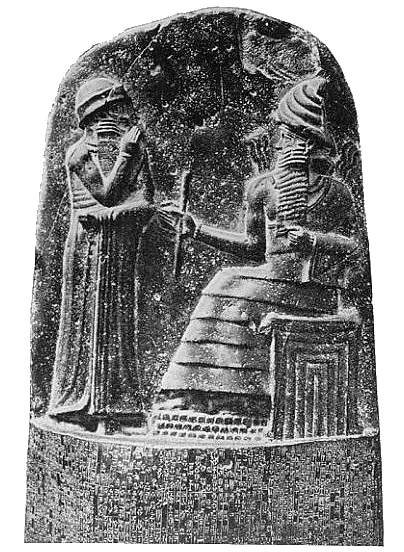
Hammurabi's Code Reflection  Last week we studied acnient Mesopotamian emperor Hammurabi who was responsible for one of the world's first written law codes. After reviewing and analyzing Hammurabi's code, what do you think? Which of Hammurabi’s laws did you find fair?  Which did you find unfair? Provide details and examples from the laws to support your claims. I have provided some sentence starters for "Scholarly Discourse" to help guide our discussion. 
 

Mesopotamia Timeline Project  Now let's combine our understanding of timelines with our knowledge about Mesopotamia. Today you will construct your own timeline about the history of Mesopotamia. You will select at least five significant events from Mesopotamia's history, arrange them in chronological order with dates, and include an image and description of importance to accompany each event. Additional directions can be found with the assignment History of Mesopotamia Timeline. You may want to use your Social Studies textbooks, Mesopotamia assignments, and trusted websites as resources (such as The British Museum and Ancient History Encyclopedia) to help find the events and dates for your timeline. I will also model how to get started on your timeline, so please pay close attention. This assignment will count towards your assessment grade and be due this Friday, October 9.  
 
Homework  Continue working on both your History of Mesopotamia Timeline, as well as the Ancient Achievements Timeline Assessment, both of which are due this Friday, October 9.  

Thursday, October 1, 2015

Analysis Skills: Understand Timelines


 Today's Focus Questions  What are the components of a timeline and how do we interpret the information timelines provide?


CNN Student News  As Social Studies students our focus should not only be on studying events from the past, but also on making sense of the news and events taking place all around the world right now. In order to be the responsible citizens and global leaders of tomorrow, we need to be understand the world we live in. Today we will watch a segment of CNN Students News which provides a run-down of some of the key news events shaping the world today. Which news story surprised you? Inspired you? Made you angry? What questions do you have? What do you want to know more about?

Learning Analysis Skills: Understand Timelines  Timelines can give historical information a beginning a middle, and an end, organizing it into a story that can improve your comprehension. Today's lesson will teach you how to use the components (or parts) of a timeline and help you interpret (make sense of) that information.  

We will first practice working with a timeline together by following the steps and answering the questions outlined below. 


Apply Analysis Skills: Understand Timelines  Now that you understand the components of a timeline and how they work, you are going to apply your acquired knowledge and demonstrate what you've learned by completing a timeline assessment. Your task is to study the timeline below and then answer the accompanying series of questions about the information included.  

The document Ancient Achievements Timeline Assessment can be found in your Social Studies Google Classroom. If it is not completed in class today, it must be completed for homework and is due Friday, October 9. Reminder: This assignment counts towards the assessment portion of your grade. 

Homework  Complete the Ancient Achievements Timeline Assessment, which is
due Friday, October 9

Tuesday, September 29, 2015

Mesopotamia: Hammurabi and Hammurabi's Code


 Today's Focus Question  Who was Hammurabi and what was the significance of Hammurabi's Code? 


Warm-Up: Early Mesopotamia Quiz  Show me what you have learned about the geography and early civilizations of Mesopotamia so far by taking the short quiz here. I will read you the questions and answers aloud, and then provide you time to finish. If you finish early, you may silent read or work on one of your digital assignments. 

Who was Hammurabi?  According to your textbook, Hammurabi "became king of the city of Babylon around 1792 B.C. For more than 30 years, he built up his army. Then he launched a series of all-out attacks against his rivals. Within a few years he had united Sumer and northern Mesopotamia into a new Babylonian Empire." 

To learn more about Hammurabi, watch the brief video below. 


Hammurabi's Code  Why was Hammurabi's law code so historically significant? To begin to understand, watch the video below. 


Hammurabi's Code Activity  Now you will have an opportunity to examine Hammurabi's code of laws in detail at the website here. You will explore real situations that Hammurabi actually faced. You will then decide what you think to be a fair way to deal with the problem. Finally, you will discover what Hammurabi declared. You will use the document You Be the Judge: Hammurabi's Code, which can be found in your Social Studies Google Classroom.
 
Homework  Complete the You Be the Judge: Hammurabi's Code assignment, which is due next Friday, October 9. 

Monday, September 28, 2015

Mesoptoamia: The First Empires

Sargon the Great was the first ruler to unite the city-states of Sumer into one empire.

 Today's Focus Question  What is an empire and how did they first develop? 


The First Empires: Guided Reading  Today we will learn how strong rulers finally conquered Mesopotamia's independent city-states to create the world's first empires. We will read the excerpts from our textbook below.  


Concept Map: Empire  In order to better understand what an empire is we will make a concept map today. You can find your Empire - Concept Map in your Social Studies Google Classroom. We will also watch the video below to learn some examples from history of empires.     


Homework  (1.) Complete your Empire - Concept Map, which will be due Thursday, October 1. (2.) We will be having a short quiz on early Mesopotamia and the Sumerians tomorrow. Please review your assignments, textbook excerpts, and Blog entries so that you are prepared.

Friday, September 25, 2015

The Week in Rap and the Development of Writing

The Sumerians developed the world's first writing known as cuneiform.

Flocabulary: The Week in Rap  Before we discuss the development writing, let's review some of the mportant news events took place this around the world this week with our friends at Flocabulary.

https://www.flocabulary.com/week-in-rap-september-25-2015/
The Development of Writing: Guided Reading  Today we will be reading an excerpt from our textbook on the 'Development of Writing'. The document 'The Development of Writing - Reading' can be found in your Social Studies Google Classroom, but can also be found here.

Thursday, September 24, 2015

Current Events and Study Hall


CNN Student News  As Social Studies students our focus should not only be on studying events from the past, but also on making sense of the news and events taking place all around the world right now. In order to be the responsible citizens and global leaders of tomorrow, we need to be understand the world we live in. Today we will watch a segment of CNN Students News which provides a run-down of some of the key news events shaping the world today. Which news story surprised you? Inspired you? Made you angry? What questions do you have? What do you want to know more about?

Academic Study Hall  In school or college, a study period or "study hall" is a period in which a student may undertake self-directed learning activities, rather than having lessons being taught by a teacher (Source: Wikipedia). Today you have the opportunity to use this period to further your academic success in the best way you see fit. I would strongly suggest using part of this time to completing some of the Social Studies assignment from the past week (which are due tomorrow). Specific suggestions about assignments or activities you may want to work on can be found below:  
  1. EdPuzzle: Mesopotamia: From Nomads to Farmers
  2. Facts About Sumerian Society
  3. The Civilization of Sumer - Cognitive Content Dictionary
  4. Silent Reading and Accelerated Reader Testing
  5. Assignments that are due soon for other classes (especially Language Arts)
  6. Assignments in the Gradebook that are missing or incomplete 
  7. Online Mesopotamia Exploration
Homework  Tomorrow is Friday! We have several assignments from the past week that need to be completed and 'turned in' tomorrow Friday, September 25, including: EdPuzzle: Mesopotamia: From Nomads to Farmers, Facts About Sumerian Society, and The Civilization of Sumer - Cognitive Content Dictionary. 

Wednesday, September 23, 2015

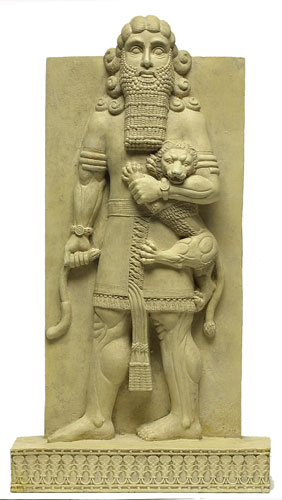
Mesopotamia: The Legend of Gilgamesh


Background on the Story of Gilgamesh  "The story of the god-man Gilgamesh is one of the oldest stories in the world; it was inscribed onto clay tablets over 5,000 years ago in Mesopotamia. There are many versions of the story but the first people who told it were called Sumerians and Gilgamesh was once their king. The people who lived in Mesopotamia discovered many things: irrigation, the wheel, the first codes of law, the 60-minute hour, and most important, writing. Without writing the epic of Gilgamesh would certainly have been lost. The Sumerians, and later other Mesopotamians such as the Akkadians, Babylonians, and Assyrians, wrote the story in cuneiform, the first script in the world." - Ludmila Zeman, Gilgamesh the King 

Read-Aloud: Gilgamesh the King  Today we will be reading together the story Gilgamesh the King, retold and illustrated by Ludmila Zeman. Some consider Gilgamesh to be the world's first literary superhero. As we read, see if you can find any connections or parallels between Gilgamesh and other superheroes you are familiar with.  

The British Museum Website: "Gilgamesh and the Cedar Forest"  Want to explore another tale of Gilgamesh and his adventures? Check out the interactive story of "Gilgamesh and the Cedar Forest" at the British Museum's website here.