Tuesday, April 21, 2015
Life in Ancient Greece
Life in Ancient Greece: Web Exploration What was it like living in Ancient Greece? Was life different for the wealthy compared to to the poor? What rights and responsibilities did women have? What was life like for boys and girls? What did different people do for work? What food did people typically eat and drink? How did they dress? What was housing like? You will discover the answers to these questions and many more during today's web exploration activity.
Today you will be exploring BBC's Primary History Ancient Greeks website. You will focus on three areas: The Greek World, Home Life, and Growing Up in Greece. Explore each of these sections and use the assignment BBC Primary History: The Ancient Greeks Website Exploration to record what you learn.
If you complete the assignment early and well, you may play the game Greek Hero available on the site's homepage.
Homework (1.) Complete your BBC Primary History: The Ancient Greeks Website Exploration, which is due Friday, April 24. (2.) Complete The Greek Poli, which is due Friday, April 24. (3.) Complete the Map of Greece, which is due Friday, April 24.
Monday, April 20, 2015
Theseus and the Minotaur and the Rise of Greek City-States
Today's Learning Objective * Discuss the connections between geography and the development of city-states in the region of the Aegean Sea.
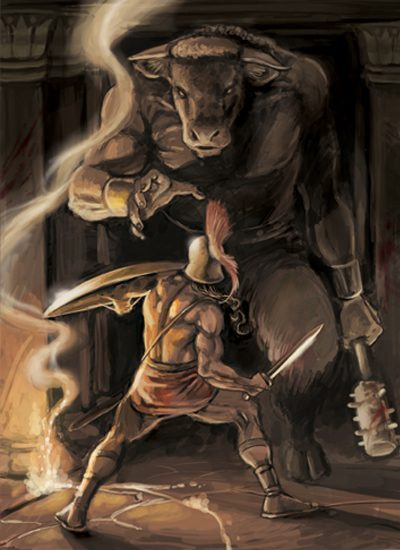
Greek Myth: Theseus and the Minotaur Greek mythology was an important part of ancient Greek culture and religion. Greek mythology often included stories about heroes. One such story is of Theseus and the Minotaur. Let's read about Theseus and the Minotaur today and then watch the short video below.
The Rise of Greek City-States Learn more about the Greek city-state, which was called a polis by watching/reading the video below. Next, complete the assignment The Greek Poli which can be found in your Social Studies folders.
Thursday, April 16, 2015
Mapping Ancient Greece
Today's Learning Objective * Discuss the connections between geography and the development of city-states in the region of the Aegean Sea.
Homework Complete your China and Geography of Early Greece EDpuzzles, both of which are due tomorrow, Friday, April 17.
Wednesday, April 15, 2015
The Geography of Ancient Greece
Today's Learning Objective * Discuss the connections between geography and the development of city-states in the region of the Aegean Sea.
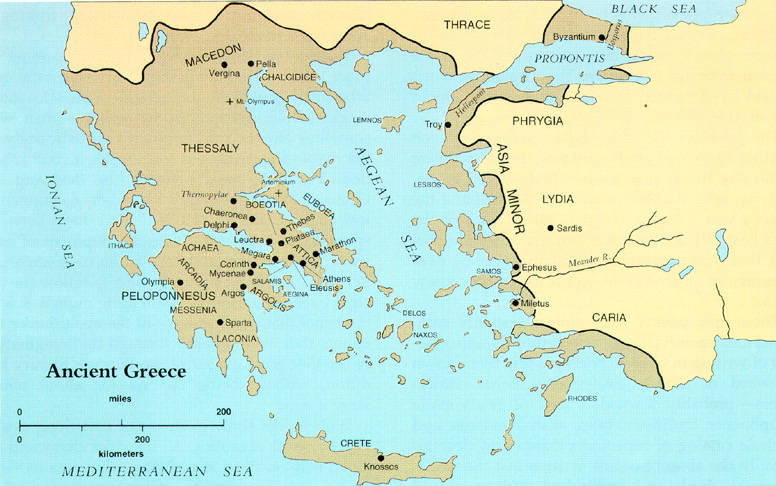
Warm Up: The British Museum Website Exploration and Padlet Observations Continue to familiarize yourself with the Geography of Ancient Greece by exploring The British Museum's website here. If you haven't already, read the introduction, follow the story of Odysseus' travels to many fantastic lands, explore maps of Ancient Greece, and finally investigate an Ancient Greek shipwreck. Also, make sure to closely study the image above. Next, head on over to Padlet and share some your observations about Greek geography and/or culture on our digital community wall. 4th period, you can find your Padlet wall here. 6th period, your Padlet wall is here.
EDpuzzle: Geography and Early Greece Today you are going to interact with an EDpuzzle video about Ancient Greek geography and history. Please take out your headphones, login to EDpuzzle, and locate the video "Geography and Early Greece." Watch the video carefully and answer the questions along the way to the best of your ability. You will be graded on the quality and completeness of your responses. If you don't finish in class, please finish for homework.
Tuesday, April 14, 2015
Goodbye Ancient China, Hello Ancient Greece
Ancient China EDpuzzle If you haven't done so, please finish your Ancient China EDpuzzle we began yesterday. It is due on Friday and will count towards your the assessment portion of your Social Studies grade.
Introduction to the Geography of Ancient Greece The geography of Ancient Greece is unlike that of any other civilization we have studied this year.Familiarize yourself with the Geography of Ancient Greece by exploring The British Museum's website here. Read the introduction, follow the story of Odysseus' travels to many fantastic lands, explore maps of Ancient Greece, and finally investigate an Ancient Greek shipwreck. If you do not get to fully explore the site in class today, please do so outside of class.
Homework (1.) Complete the Ancient China EDpuzzle. (2.) Finish fully exploring the 'Geography' section of the British Museum's website on Ancient Greece.
Monday, March 30, 2015
The Han Dynasty and the Silk Road
Today's Learning Objective * Detail the political contributions of the Han Dynasty to the development and expansion of the empire.
Warm-Up: Ancient China Quiz Show me what you've learned this past week about the Zhou Dynasty, the Warring States Period, Confucius, and Shi Huangdi and the Qin Dyansty by taking the online quiz here.
The Han Dynasty: Jigsaw Reading Activity Today we will be learning about the achievements of the Han, the dynasty that ends up replacing the Qin. However, due to limited time we are going to do a "jigsaw reading" of the passage about the Jigsaw Dynasty. Each group will be assigned one passage from the text, become experts on one particular topic, and then report out to the class about what they learned. You can find the Han Dynasty passage here. Please wait for your assignment before beginning to read.
The Silk Road: EDpuzzle Video One of the greatest achievements of the Han Dynasty was the innovation of the "Silk Road." Learn more about it by interacting with an EDpuzzle video today. After you log in, locate the video entitled "The Silk Road and Ancient Trade." Watch the video carefully and answer the five questions. What you don't finish in class becomes homework.
Homework Finish your "Silk Road" EDpuzzle video and answer the questions.
Friday, March 27, 2015
The Tomb of the First Emperor Meets Main Idea and Details
Today's Learning Objective * List the policies and achievements of the emperor Shi Huangdi in unifying northern China under the Qin Dynasty. * Determine central ideas of a text and summarize the key supporting details and ideas.
The First Emperor: Main Idea and Details Today you will be reading about the tomb of Shi Huangdi ("The First Emperor") from an excerpt in your Language of Literature textbooks. Yes, you will be reading from a book today with actual pages. No groaning! "The First Emperor" is an example of informative nonfiction as it provides factual information about a historical figure-the first emperor of China.
Your objective as you read today is to identify the main idea and details of selected passages (as well as learn more amazing information about Mr. Shi Huangdi). If you need a refresher on main idea and supporting details, check out the image below.
The passage "The First Emperor" begins on page 729 of your Language of Literature textbook. Use the document "The First Emperor" Main Idea and Details, which can be found in your Social Studies folders to record the main idea and details of selected passages.
Subscribe to:
Posts (Atom)
-
Chinese philosopher Confucius Warm Up Read about the life and work Confucius, of one of the world's most famous philosophers, her...
-
Hammurabi's Code Reflection Last week we studied acnient Mesopotamian emperor Hammurabi who was responsible for one of the world...
-
Zahra and Ali from "Children of Heaven" Building Background: Iran and Muslim Stereotypes Last week, students in Ms. Rain...