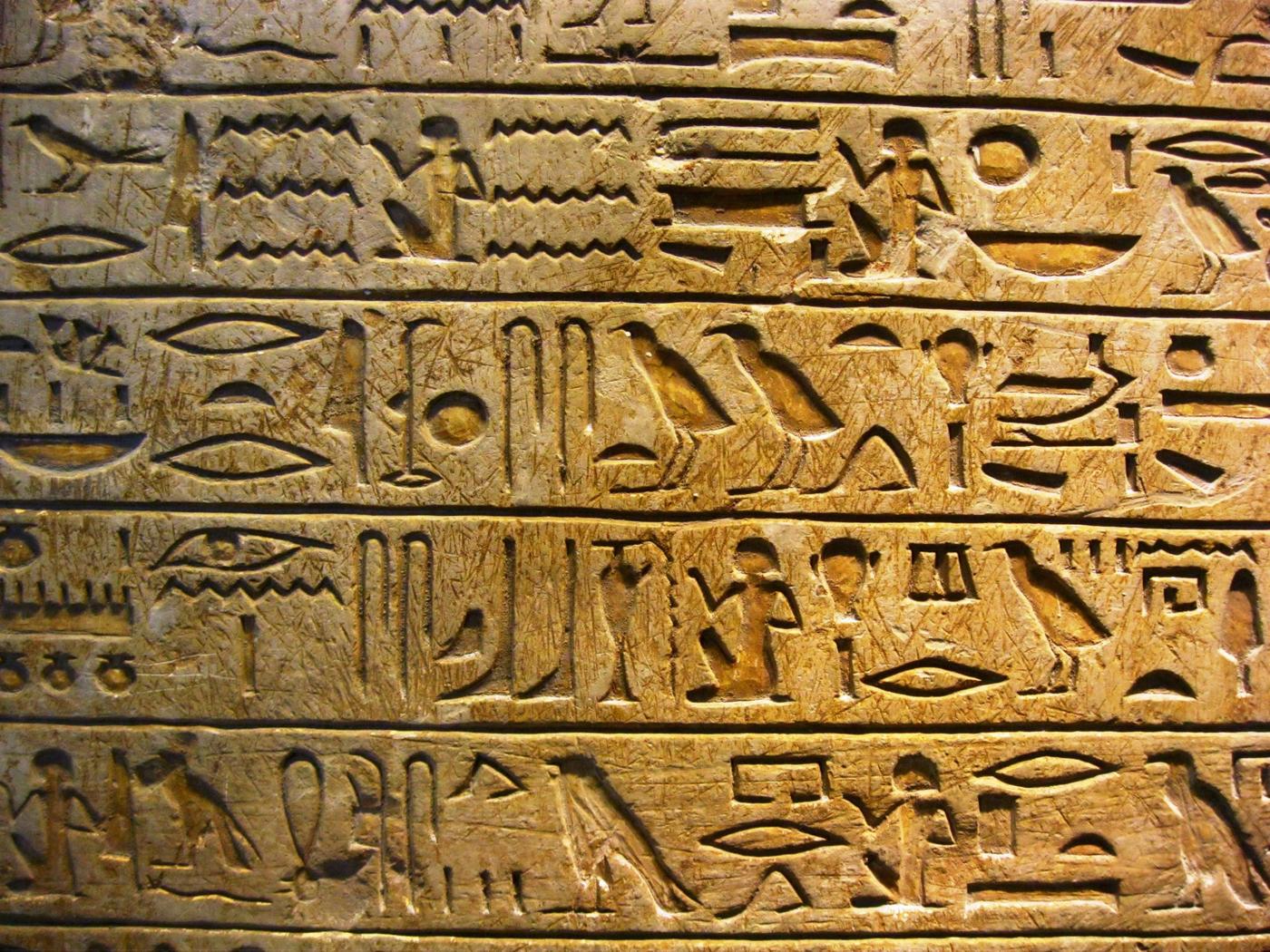
Lesson Focus Question What did writing look like in ancient Egypt and how was it used?
Ancient Egyptian Writing Overview Today we are going to continue to learn about ancient Egyptian writing. The following is an excerpt from the British Museum's online Ancient Egypt exhibit: The ancient Egyptians believed that it was important to record and communicate information about religion and government. Thus, they invented written scripts that could be used to record this information. The most famous of all ancient Egyptian scripts is hieroglyphic. However, throughout three thousand years of ancient Egyptian civilization, at least three other scripts were used for different purposes. Using these scripts, scribes were able to preserve the beliefs, history and ideas of ancient Egypt in temple and tomb walls and on papyrus scrolls.
The Story of Ancient Egyptian Writing: The British Museum We will now learn about how writing changed in ancient Egypt over time by reading an interactive story at the British Museum's online Ancient Egypt exhibit, which can be found here.
How and Where Writing was Used in Ancient Egypt: Online Exploration You will now have an opportunity to explore the various ways and places writing was used in ancient Egypt, by exploring the site here. Click on the "scribe" and learn was his or her job was. Click on the various places around ancient Egypt and discover what role writing played there.
Newsela Article: 'Paris Target of Deadly Attacks' Visit your Social Studies Google Classroom and locate the Newesla article about the recent terrorist attacks in Paris. Follow the link to Newsela, login, set the reading level to 880L, read the article carefully, take the quiz, and write the constructed response paragraph. When you are finished, return to Google Classroom and make the assignment as 'Done.' You have until Friday, November 20, to complete this assignment.

Homework Complete the activities related to the Newela article about Paris terrorist attacks, which should be marked as 'done' by Friday, November 20.


No comments:
Post a Comment