Friday, May 1, 2015

What's So Great About Alexander?


 Today's Learning Objective  Trace the rise of Alexander the Great and the spread of Greek culture. 


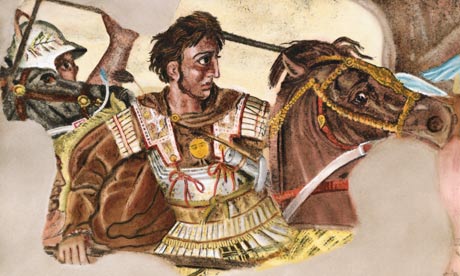
Warm-Up Today we will be learning about one of the most famous and powerful figures in world history: Alexander the Great. Read a short description of Alexander's life and achievements at Ducksters and then share something you learned about the man on your class's Padlet wall. Period 4, your Padlet wall is here. Period 6, you can find your wall here.  

Alexander the Great Video Hour Let's continue to learn about Alexander the Great through a series of humorous historical videos.The first is from the team at Crash Course; the second is from the creative minds of Horrible Histories. What sort of portrait is being painted of Alexander? Does he come across as 'great' in your mind? If you have any new ideas or things you've learned about Alexander the Great, you may add them to your class's Padlet wall. 


Group Discussion: Is Alexander Great or Not So Great? Today you and the members of your team are going to discuss Alexander the Great's achievements and whether they indicate greatness or something else entirely.In your Language Arts folders I have placed guidelines for "Scholarly Discourse." Feel free to use them to help guide your conversation with your classmates.Make a point to express your ideas using academic language, build upon each other's ideas, ask clarifying questions, and even disagree with each other in a scholarly manner.    

Thursday, April 30, 2015

Comparison/Contrast Paragraph Writing and Greek Gods and Goddesses

How many of the ancient Greek gods and goddesses can you identify?

 Today's Learning Objective  Compare and contrast life in Athens and Sparta. Explain the significance of Greek mythology to the everyday life of people in the region. 


Athens and Sparta: Writing a Comparison/Contrast Paragraph Today will be your final day to work on writing your Athens and Sparta - Comparison/Contrast Paragraph. Make sure your assessment paragraph has a clear topics sentence identifying what is being compared, details illustrating similarities and differences, and signal words to show those similarities and differences. DeadlineWednesday, May 6

Ancient Greek God and Goddess Web Exploration Unfortunately, due to time constraints we had very little class time dedicated to learning about Ancient Greek mythology and religion, which many consider to be the most interesting aspects of Ancient Greece. If you finished your comparison/contrast paragraph, you are welcome to use class time today to explore Ancient Greek mythology and religion, especially as it pertains to their gods and goddesses. You may enjoy the websites and videos below.  

Wednesday, April 29, 2015

Athens and Sparta: Writing a Comparison/Contrast Paragraph


 Today's Learning Objective  Compare and contrast life in Athens and Sparta.


Athens and Sparta: Writing a Comparison/Contrast Paragraph Today we will take the information we gathered about the differences and similarities between Athens and Sparta and transform them into a well-written comparison/contrast paragraph. Before we do, however, let's take a look at a sample paragraph.
  

Notice that comparison-contrast paragraph includes a clear topic sentence that names two things and identifies whether they are alike, different or both, contains details that illustrate the similarities and/or differences, and uses signal words to emphasize these similarities and differences. You can see the steps to writing a good comparison-contrast paragraph below.


Now it's time for you to write your own your own comparison-contrast paragraph on Athens and Sparta. The assignment Athens and Sparta - Comparison/Contrast Paragraphwhich includes a list of signal words and an assignment checklist, can be found in your Social Studies folders. 

Tuesday, April 28, 2015

Comparing and Contrasting Sparta and Athens (Day 2)


 Today's Learning Objective  Compare and contrast life in Athens and Sparta.


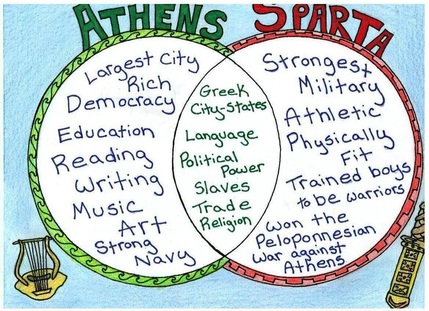
Video Analysis: Sparta and Athens  Today we will continue use our Athens and Sparta - Venn diagram to explore the similarities and differences between Ancient Greece's two most famous city-states, Sparta and Athens. First, we will watch a compilation of scenes from the movie 300, which illustrates the values, emphasis on war, and harsh lifestyle of the Spartans. Continue to use your Venn Diagram from yesterday to take notes and similarities and differences. 


Next, we will watch a BrainPop video on life in Athens. I will play the video for you on the Big Screen, but you may also access the video using the BrainPop app in your Google Drive. 
  

Types of Government: Sparta and Athens  Now we will read about the different types of government in Ancient Greece, particularly in Sparta and Athens. A document Government in Ancient Greece (Sparta and Athens) has been placed in your Social Studies folders. Please open it and let's process it together. Continue to add new details to your Athens and Sparta - Venn diagram. Tomorrow we will use the similarities and differences about Athens and Sparta that we have gathered to write compare/contrast paragraphs.    

Homework  Complete your Athens and Sparta - Venn diagram.  

Monday, April 27, 2015

Athens and Sparta


 Today's Learning Objective  Compare and contrast life in Athens and Sparta.


Writing Warm-Up Based on your prior knowledge and the studies you've done so far, what do you already know about the city-states of Athens and Sparta? Share your knowledge on your class Padlet wall. 4th Period, visit your wall here. 6th Period, you can find your wall here.   

Compare and Contrast: Athens vs. Sparta (Overview) Today we will discuss the similarities and differences between Athens and Sparta. You will find a Athens and Sparta - Venn diagram in your Social Studies folders that you will use to compare and contrast these two city-states. Fill out your venn diagram as you watch the video below.


Compare and Contrast: Athens and Sparta (Family and the Role of Women) Continue to compare and contrast Athens and Sparta using your venn diagram while watching this very humorous take on Ancient Greek families and the role of women from Horrible Histories below. 


Homework Complete the Athens and Sparta - Venn diagram

Tuesday, April 21, 2015

Life in Ancient Greece


Life in Ancient Greece: Web Exploration What was it like living in Ancient Greece? Was life different for the wealthy compared to to the poor? What rights and responsibilities did women have? What was life like for boys and girls? What did different people do for work? What food did people typically eat and drink? How did they dress? What was housing like? You will discover the answers to these questions and many more during today's web exploration activity.  

Today you will be exploring BBC's Primary History Ancient Greeks website. You will focus on three areas: The Greek WorldHome Life, and Growing Up in Greece. Explore each of these sections and use the assignment BBC Primary History: The Ancient Greeks Website Exploration to record what you learn. 

If you complete the assignment early and well, you may play the game Greek Hero available on the site's homepage.  

Homework  (1.) Complete your BBC Primary History: The Ancient Greeks Website Exploration, which is due Friday, April 24.  (2.) Complete The Greek Poli, which is due Friday, April 24. (3.) Complete the Map of Greece, which is due Friday, April 24

Monday, April 20, 2015

Theseus and the Minotaur and the Rise of Greek City-States


 Today's Learning Objective  Discuss the connections between geography and the development of city-states in the region of the Aegean Sea. 


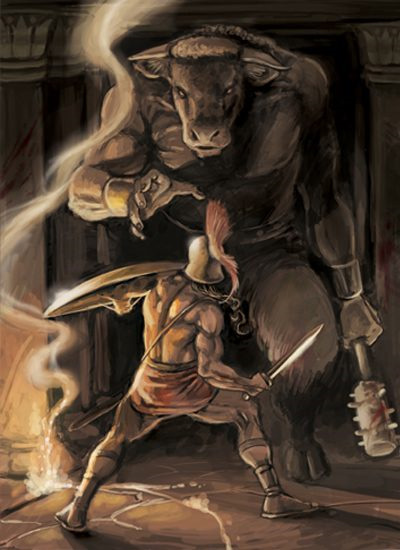
Greek Myth: Theseus and the Minotaur Greek mythology was an important part of ancient Greek culture and religion. Greek mythology often included stories about heroes. One such story is of Theseus and the Minotaur. Let's read about Theseus and the Minotaur today and then watch the short video below.


The Rise of Greek City-States Learn more about the Greek city-state, which was called a polis by watching/reading the video below. Next, complete the assignment The Greek Poli which can be found in your Social Studies folders.