Thursday, October 22, 2015

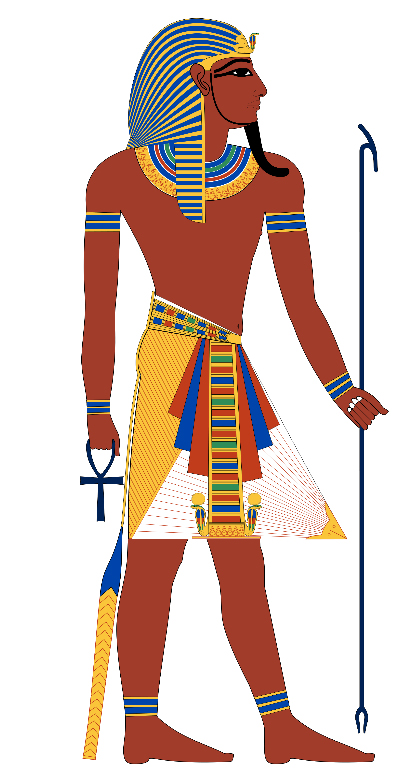
Egyptian Pharaoh Study: Hatshepsut


 Today's Learning Objective    Understand the significance of Queen Hatshepsut 

Examining Hatshepsut from Multiple Sources  Queen Hatshepsut was one of the most important leaders in Ancient Egypt's history. In order to understand her significance we will be consider Hatshepsut using multiple sources. We will examine a section from our Social Studies textbook, an excerpt from the book Hathshepsut: His Majesty, Herself, a primary source document that includes Hatshepsut's own words, a short documentary video, and finally a poem. By examining a text set composed of a variety of sources, my hope is that you will develop a more comprehensive understanding of this remarkable figure from history.

You will use the document Hatshepust Notes, located in your Social Studies Google Classroom, to document the important things you learn about her and her reign. 

We will begin by reading an excerpt from our Social Studies textbook below.    

Now we will read an excerpt from the book Hathsepsut: HIs Majesty, Herself, which focuses on what Hatshepsut did in order to be accepted as pharaoh by the Egyptian people. 


Next, we will examine a primary source. A primary source is a document or physical object which was written during the time under study. The words below are said to be Hatshepsut's and come directly form an obelisk (an Egyptian monument) inscription created during her reign. What do we learn about Hatshepsut from her actual words? Should this source carry more weight than others? 


Next, check out the short documentary video about Hatshepsut below. 


Finally, read this poem by Ruth Whitman written from the perspective of Hatshepsut. 


HATSHEPSUT:


Before my father came to the throne  


there was chaos in our double kingdom- 


from the Great Green Sea on the north  


to the land of Nubia on our south.


Men without breasts love war.  


They measure their height


by the mountains of severed hands  


piled up, cut from their enemies.


But I saw our land laid out in peace:  


Thebes, the southern city, the horizon of earth  


stretching east to west


and the fecund river cleaving the land


south to north.  


Sun and moon


sail from east to west


across the Nile,


from life to death


and back again.


Symmetry. Order.  


The Nile


floods, recedes, floods.


And over us stretches Nut, 


the goddess who is the sky. 


The sun travels by night 


through her body,


the moon and stars by day. 


Her toes touch the east,


her fingers reach to the west, 


she arches over us,


rainbow mother of night and day.

Homework  (1.) Complete the Map of Ancient Egypt, Egypt Under the Pharaohs - Cognitive Content Dictionary, and Authority Under the Pharaoh assignments, all of  which are due tomorrow, Friday, October 23. (2.) Continue working on the Hatshepsut Notes assignment, which is due next Friday, October 30.

Wednesday, October 21, 2015

Egypt Under the Pharaohs (Day 2)

 Today's Focus Question  How did the pharaohs gain authority over a large kingdom? 


Guided Reading: Egypt Under the Pharaohs  Today we are going to read about how the pharaohs, or rulers of Egypt, were able to gain the authority to rule over Egypt. Where did this assumed power come from? How were a succession of pharaohs able to maintain control of Egypt for so long? As we read excerpts of your Social Studies workbook below, you will use the document Sources of Pharaoh's Authority, which is located in your Social Studies Google Classroom, to take notes on this topic. 


Homework  Complete the assignment Sources of Pharaoh's Authority by Friday, October 23. 

Tuesday, October 20, 2015

Egypt Under the Pharaohs


 Today's Focus Question  How did the pharaohs gain authority over a large kingdom? 


Egypt Under the Pharaohs: Vocabulary Study  Today we will study the key vocabulary related to the leaders and governing of Ancient Egypt, using the document Egypt Under the Pharaohs - Cognitive Content Dictionary, which can be found in your Social Studies Google Classroom. We will be using an excerpt from our Social Studies textbook, which can also be found in your Social Studies Google Classroom (as well as here) to help us understand the lesson's key words and concepts. This assignment will be due Friday, October 23. 

CNN Student News and Current Event Mapping  As we watch CNN Student News today, identify one or two news stories that you can pinpoint geographically and place on the Current Event layer of your Social Studies World Map via Google Maps. 

Hong Kong and the University of Mississippi (Oxford, Mississippi) were both featured in today's segment. After pinning at least one of these places on your map, consider the most important question: What happened here? You should include a title for the event, the date(s) the event took place, a brief summary of what happened, and include an appropriate photo or video.

Homework  (1.) Don't forget that your Map of Ancient Egypt is due Friday, October 23. (2.) Complete the Egypt Under the Pharaohs - Cognitive Content Dictionary by Friday, October 23. 

Monday, October 19, 2015

Mapping Ancient Egypt and Previewing the Pharaohs


Mapping Ancient Egypt Activity  Today is your last class day to work on your map of Ancient Egypt. You can still find the assignment Map of Ancient Egypt in your Social Studies Google Classroom. Remember that directions for how to complete the activity are included with the map. 

Exploring Egyptian Pharaohs  If you completed your Ancient Egypt Map, and are ready to continue your exploration of Ancient Egypt, consider an independent investigation of what it meant to be a pharaoh. Tomorrow we will officially learn as a class that the pharaoh was essentially the ruler of Egypt, but today why don't you explore who some of the various pharaohs were over the course of Egyptian history, what their responsibilities were, and what their lives were like. 

The British Museum's Ancient Egypt site has a great section dedicated to the pharaohs here. After reading some background about pharaohs, you can read a story about one of Ancient Egypt's greatest pharaohs Ramses II here. Next, explore Egyptian wall art featuring Ramses II here. Another great resource is the Discovering Egypt site, which has a whole area dedicated to Ancient Egyptian Kings & Kings. 

Homework  Complete your Map of Ancient Egypt, which is due Friday, October 23.  

Friday, October 16, 2015

Mapping Ancient Egypt (Day 2)


Turn-In Assignment Friday  It's Friday and that means it's time to turn in our assignments from the past week. In addition to completing at least two Digital Reading Log entries, you should have also finished and 'turned in' the following: Ancient Egypt Webquest, The Nile River - Cognitive Content Dictionary, and The Nile River - Notetaking Study Guide. Please make sure if you completed these assignments you turn them in through Google Classroom, so you can receive credit.

Mapping Ancient Egypt Activity  Today you continue working on your map of Ancient Egypt. You can still find the assignment Map of Ancient Egypt in your Social Studies Google Classroom. Remember that directions for how to complete the activity are included with the map. This is due next Friday, October 23. 

Explore the Eagle Times Online School Newspaper  If time permits, check out the hot-of-the-presses brand-new online edition of the Eagle Times, Lakeview's very own student newspaper. The stories are written by and for students, with the guidance of teacher extraordinaire Mr. Gilbert. Please visit the site, bookmark it, and check back regularly for exciting new content.  

Thursday, October 15, 2015

Mapping Ancient Egypt


Mapping Ancient Egypt Activity  Today you will demonstrate what you have learned about the land, important places, and geographic features in and around Ancient Egypt, by labeling a blank map of the region. In your Social Studies Google Classroom you can find the assignment Map of Ancient Egypt. Directions for how to complete the activity are included with the map. 

You may utilize various resources to help you complete the activity. The map below, featured in our Social Studies textbooks, I find particularly helpful. The British Museum's Egypt site also features various maps of Egypt here. Also, some really nice maps of Ancient Egypt can be found here.  

This mapping activity builds upon things that we have studied in class and serves as one way to demonstrate what you have learned about the geography of Ancient Egypt. Therefore, it will count towards your Social Studies assessment grade. In fact, it will be the first graded assessment of the upcoming 2nd quarter and is due on Friday, October 23. 

CNN Student News and Current Event Mapping  As we watch CNN Student News today, identify one or two news stories that you can pinpoint geographically and place on the Current Event layer of your Social Studies World Map via Google Maps. 

Las Vegas, China, and Thailand were all featured in today's segment. After pinning at least one of these places on your map, consider the most important question: What happened here? You should include a title for the event, the date(s) the event took place, a brief summary of what happened, and include an appropriate photo or video.

Homework  Complete the Ancient Egypt Webquest, The Nile River - Cognitive Content Dictionary, and The Nile River - Notetaking Study Guide assignments, all of  which are due tomorrow, Friday, October 16.  

Wednesday, October 14, 2015

Ancient Egypt: The Nile River Valley (Day 3)


 Today's Focus Question  How did the Nile River affect where people settled in Ancient Egypt?


Warm Up: Adventure on the Nile River  Today you will begin your day at the British Museum's Egypt website here. Your task is to accompany an ancient Egyptian boy from a farming family as he navigates the Nile River. You will help the boy make important decisions about how and where he travels. His survival may ultimately be in your hands. Pay attention to the details of ancient Egypt's geography along the way. 

Guided Reading: The Nile River Valley  Now we will read from the textbook section "The Nile River Valley". The reading selection can be found digital form in your Social Studies Google Classroom, on pages 96-99 of your Social Studies textbooks, and at the link here. 

As you read, you will record key information from the section using the document The Nile River Valley - Notetaking Study Guide, which can also be found in your Social Studies Google Classroom.

Map of Ancient Egypt, featuring Lower and Upper Egypt


The kings of Upper Egypt work white crown, while the kings of Lower Egypt wore red.

Lower and Upper Egypt were often at war with each other.

According to legend, King Menes was the two kingdoms into one, in about 3100 B.C. The ruler of the combined kingdom wore a double crown of red and white, and was known as the "Lord of the Two Lands." 

Homework  Complete The Nile River - Notetaking Study Guide, which will be due this Friday, October 16.