Friday, December 11, 2015

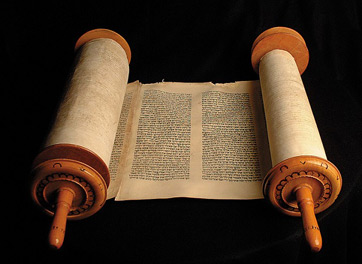
Judaism and Chanukah


The Story of Chanukah  As our unit on Judaism and the ancient Hebrews nearing an end, and with the celebration of Chanukah (or Hanukkah) happening now, I thought it would be fitting to learn more about the history and customs related to this important Jewish holiday. To learn more about the story of Chanukah, check out the video below. 
 

Why do Jewish people celebrate an event that happened so very long ago? Listen as these talented young men explain why through song. 


And in light of our recent poetry unit, what better way to understand the meaning of this important holiday than through a couple of poems. 


Video Treat: "Rugrats Chanukah"  The Rugrats learn about the "The Meaning of Chanukah" in this holiday special.

Thursday, December 10, 2015

Mapping the Present and the Past


CNN Student News and Current Event Mapping  As we watch CNN Student News today, identify one or two news stories that you can pinpoint geographically and place on the Current Event layer of your Social Studies World Map via Google Maps.  

Germany; Rio de Janeiro, Brazil; Texas; Binghamton University, New York; and Austin, Minnesota were all featured in today's segment. After pinning at least one of these places on your map, consider the most important question: What happened here? You should include a title for the event, the date(s) the event took place, a brief summary of what happened, and include an appropriate photo or video.

Mapping Hebrew History  Now let's turn our attention to mapping ancient history. Through our studies of the ancient Hebrews we have learned that migration is an important part of their story. This is clearly evident in Abraham's journey from Mesopotamia to the "promised land" of Caanan, the move to Egypt to escape famine, and the subsequent  Exodus, in which Moses led the Hebrews out of Egypt to the Sinai Peninsula.

Today I would like you to utilize the Ancient History Layer of your Social Studies World Map to pin some of the significant locations in early Hebrew history, explain their significance, and to track the migration of Hebrews between these places. Ur, Haran, Canaan, Egypt, and Mount Sinai, for example, are all places that should be identified on your map. What happened at these locations? You should include a title for the event, the date(s) the event took place, a brief summary of what happened, and include an appropriate photo or video. Next, try using the 'Draw a line' function on your Google Map to show the routes of Hebrew migration. Several maps and excerpts from your Social Studies textbook have been provided below to support you in your project. 

Screen Shot 2014-11-10 at 8.33.45 AM.pngScreen Shot 2014-11-10 at 8.33.52 AM.png
 Screen Shot 2014-11-10 at 8.34.07 AM.png 
Screen Shot 2014-11-10 at 8.34.16 AM.png
 

Tuesday, December 8, 2015

Beliefs of Judaism: Paragraph Writing


Beliefs of Judaism Paragraph: Overview  Today our objective is to transform what we have learned about the core beliefs of the religion of Judaism into a well-written and well-organized expository paragraph that demonstrates our developing understanding.

You can find the document Beliefs of Judaism: Expository Paragraph in your Social Studies Google Classroom. The document includes a paragraph graphic organizer and a list of helpful transition words (similar to what you see featured below) to help you with the construction of your paragraph. You will also need to utilize your Basic Beliefs of Judaism - Notetaking Guide as a resource. Today I will model how to use each tool and resource, and show you how to get started on writing your paragraph. A rubric outlining how the paragraph will be assessed can also be found below.


Homework  A final draft of your Beliefs of Judaism: Expository Paragraph must be completed by Friday, December 11.

Monday, December 7, 2015

The Beliefs of Judaism and CNN Student News

President Obama's address to the nation last night was one of the stories of the day featured on CNN Student News.


 Today's Focus Question  What are the basic beliefs of the religion of Judaism?


The Beliefs of Judaism: Guided Reading and Notetaking  Today we are going to continue to learn about three of the core beliefs of the religion of Judaism. Remember, as we read, your objective is to synthesize what you learn about each belief from two different sources (the Social Studies textbook and workbook) and take notes on what you find to be most important, using the Basic Beliefs of Judaism - Notetaking Guide (located in your Social Studies Google Classroom). Tomorrow, you will use these notes to construct an expository (informational) paragraph about the beliefs of Judaism. 

CNN Student News and Current Event Mapping  As we watch CNN Student News today, identify one or two news stories that you can pinpoint geographically and place on the Current Event layer of your Social Studies World Map via Google Maps. San Bernardino, California; Washington, D.C.; Paris, France; Boulder, Colorado; and Mountain View, California were all featured in today's segment. After pinning at least one of these places on your map, consider the most important question: What happened here? You should include a title for the event, the date(s) the event took place, a brief summary of what happened, and include an appropriate photo or video. 

Friday, December 4, 2015

The Ancient Hebrews: The Beliefs of Judaism (Day 2)


 Today's Focus Question  What are the basic beliefs of the religion of Judaism?


The Beliefs of Judaism: Guided Reading and Notetaking  Today we are going to learn about three of the core beliefs of the religion of Judaism. As we read, your objective is to synthesize what you learn about each belief from two different sources (the Social Studies textbook and workbook) and take notes on what you find to be most important, using the Basic Beliefs of Judaism - Notetaking Guide (located in your Social Studies Google Classroom). Next week, you will use these notes to construct an expository (informational) paragraph about the beliefs of Judaism. 


Source: Ancient Civilizations textbook 


Source: Ancient Civilizations workbook 
Source: Ancient Civilizations textbook 


Source: Ancient Civilizations workbook 
Source: Ancient Civilizations textbook 
Source: Ancient Civilizations workbook 

Thursday, December 3, 2015

The Ancient Hebrews: The Beliefs of Judaism

The Star of David: As a symbol, the six-pointed star has represented Judaism in many lands for many centuries. 


 Today's Focus Question  How did the ancient Hebrews develop and record their beliefs?


The Beliefs of Judaism: Vocabulary Study  Today we will study some of the key vocabulary related to the beliefs of Judaism, using the document Beliefs of Judaism - Cognitive Content Dictionary, which can be found in your Social Studies Google ClassroomWe will be using an excerpt from our Social Studies textbook, which can also be found in you Social Studies Google Classroom (as well as here), to help us understand the lesson's key words and concepts.

Homework  (1.) Complete the assignment Beliefs of Judaism - Cognitive Content Dictionary, which will be due next Friday, December 11(2.) Tomorrow is Friday, so several assignments from the past week are due, including: The Origins of Judaism - Questions  and The Origins of Judaism - Cognitive Content Dictionary.

Wednesday, December 2, 2015

CNN Student News and Mapping Historical Events

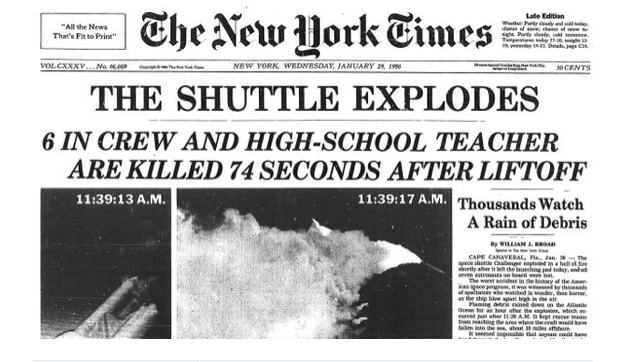
Challenger Space Shuttle Explosion, 1986
Tienanmen Square Massacre, 1989
Fall of the Berlin Wall, 1989
Nelson Mandela Freed, 1990
Terrorist Attacks on the U.S., 2001
Hurricane Katrina, 2005
CNN Student News and Mapping Historical Events  CNN Student News is featuring a special segment n which they are looking back at some of the major news stories that have made headlines and history since 1980. Though these historical events are not necessarily current, they certainly can't be considered ancient either. Identify one or two news stories that you can pinpoint geographically and place on the Current Event layer of your Social Studies World Map via Google Maps. 

A partial list of some of the events featured in the CNN Student News segments can be found below:

Assassination Attempt of President Reagan (1981)
Challenger Space Shuttle Explosion (1986)
Rescue of Baby Jessica (1987)
Exxon Oil Spill (1989)
Tienanmen Square Massacre (1989)
Fall of Berlin Wall (1989)
Bay Area Earthquake (1989)
Nelson Mandela Freed from Prison (1990)
First Gulf War (1991)
Bosnian Civil War (1992)
Waco Standoff (1993)
World Trade Center Bombing (1993)
Rwanda Genocide (1994)
Oklahoma City Bombing (1995)
Death of Princess Diana (1997)
Florida Vote Recount (2000)
Terrorist Attacks on the U.S. (2001)
Launch of War in Iraq (2003)
Columbia Space Shuttle Disaster (2003)
Tsunami (2004)
Hurricane Katrina (2005)
Killing of Osama Bin Laden (2011)
Trayvon Martin Verdict (2013)
 

Be selective. You can't pin all of these events today. Which are you most interested in learning more about? Once you've decided on an event, you need to research where it took place. What happened there? Who was involved? When did it happen? Why was it significant? These are just some of the questions that good reporters ask. After you title your historical event on your map, include the answers to some of these questions as part of the accompanying text. Remember, you can also include an appropriate image or video that relates to the event.