Friday, January 30, 2015

The Life of Buddha Meets a Comic Strip

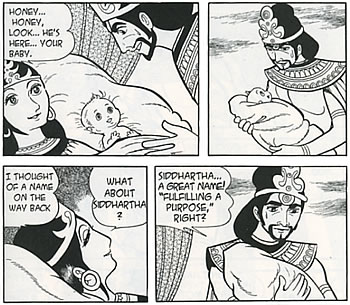
Can you demonstrate what you have learned about the story of Siddhartha Gautama (The Buddha) 
by encapsulating his life in a comic strip, like famed cartoonist and animator Osamu Tezuka did above?

Today's Learning Objective  Know the life and moral teachings of the Buddha. 

The Life of Buddha: Examining Multiple Sources  Today we will finish learning about the life of Siddhartha Gautama (The Buddha) and how Buddhism originated. We will continue examining Buddha's life from multiple sources, including 'The Story of Buddha" created by the site buddha.net which you can find here, excerpts from our Social Studies Ancient Civilizations workbook posted on yesterday's Blog, and parts of the movie Little Buddha, all while recording and synthesizing key events from his life using the document Important Events in the Life of Siddhartha Gautama (The Buddha)

Introducing the Comic Strip  Many of you are familiar with comics and comic books, which generally feature a story told a series of panels which include illustrations and dialogue. See an example of the classic "Garfield" comic strip below.


I would like you to create a comic strip of your own focused on the Buddha, as a way of demonstrating what you have learned so far about his life and teachings. Ultimately, you will have a choice whether to create a comic strip digitally using an online program called ToonDoo or drawing and designing one in the classic style using paper and colored pencils and markers. 

Today, however, I would like everyone to play and experiment with ToonDoo in order to familiarize themselves with this new resource. First, head on over to ToonDoo and click the red "Sign Up" button. Next, select the "FREE" version like the one pictured below. 


Next, you will see a screen (like the one below) that will ask you for your Username, Password, and Email ID. Please select a Username and Password that you can remember. Consider using the same ones you use for logging on to your Google Drive. As for your Email ID, enter your studentID#@pvusd.net, and then click "Register." 


Finally, click the "CREATE" button, select a layout, and start playing! You may select your own characters, choose different backdrops, draw your own designs, add props and text, and even design your own faces for your cartoons. Have fun today! 

Thursday, January 29, 2015

The Origins of Buddhism: The Life of Buddha (Day 2)


 Today's Learning Objective  Know the life and moral teachings of the Buddha. 

The Life of Buddha: Examining Multiple Sources  Today we will continue read about the life of Siddhartha Gautama (The Buddha) and how Buddhism came to be. We will continue reading the version of the 'Story of the Buddha' created by the site buddha.net which you can find here, while recording key events from his life using the document Important Events in the Life of Siddhartha Gautama (The Buddha)

We will then compare this version of Buddha' life with excerpts about Buddha included in the Interactive Reading Guide of our Ancient Civilizations textbook below. We will also be watching recreations of parts of Buddha's life story featured in the the movie Little Buddha. Ultimately, our goal is to synthesize these three tellings of Buddha's life using our document Important Events in the Life of Siddhartha Gautama (The Buddha)


Homework  (1.) Continue working on your assignment Important Events in the Life of Siddhartha Gautama (The Buddha)(2.) The assignment Hinduism Study Guide (A Central Idea and Its Parts) is officially due tomorrow, Friday, January 30

Wednesday, January 28, 2015

The Origins of Buddhism: The Life of the Buddha

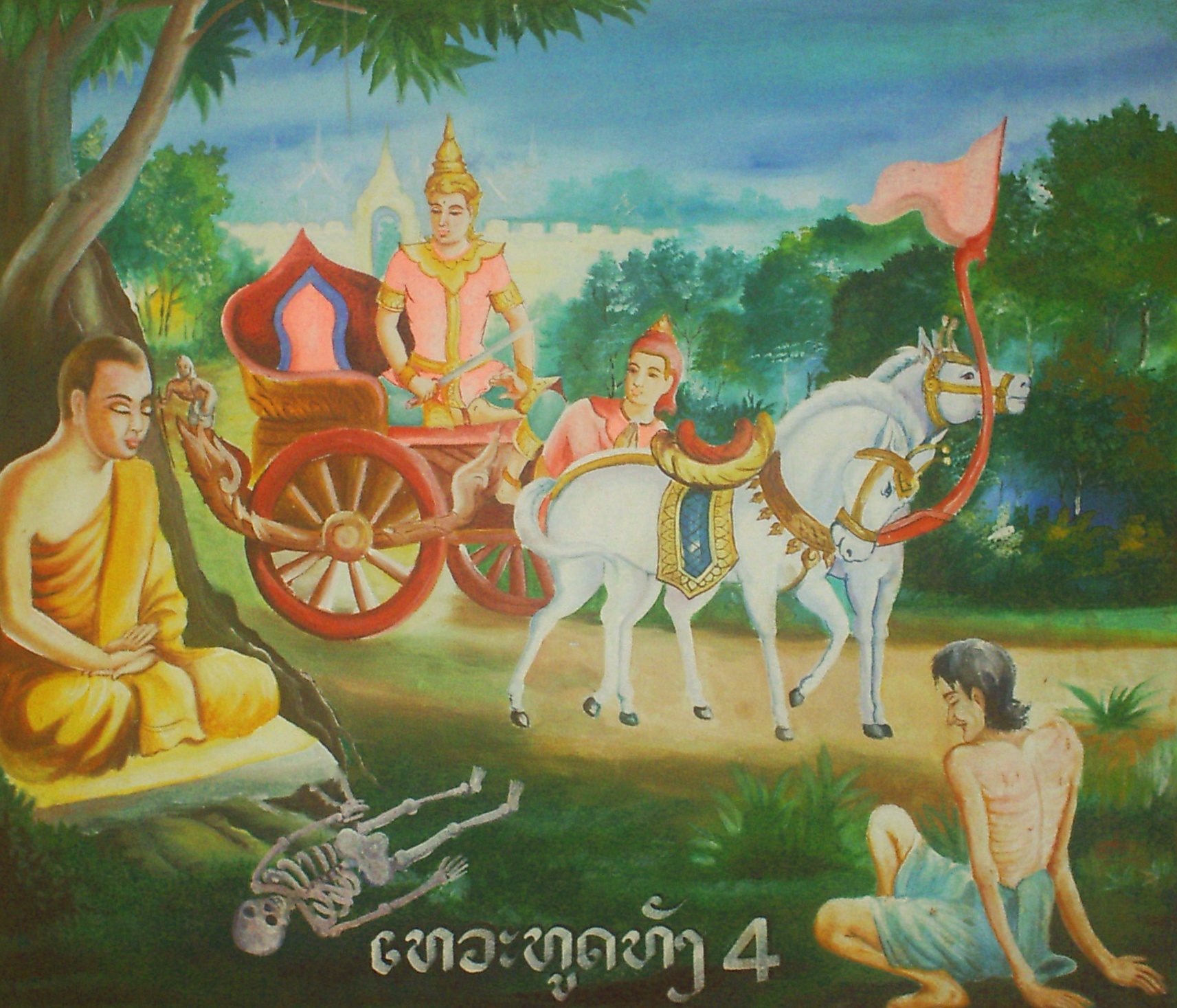
Siddhartha Gautama sat under the Bodhi Tree until he gained enlightenment and became the Buddha. 


 Today's Learning Objective  Know the life and moral teachings of the Buddha. 


Background Knowledge  In our previous unit, we learned about Hinduism, the first major world religion to take root in ancient India. A second major religion known as Buddhism also has its roots in India. Buddhism is a religion based on the teachings of Siddhartha Gautama, an Indian spiritual leader. Today you will begin to learn about Siddhartha's life and his founding of Buddhism.  

The Life of Buddha  One of the key differences between Hinduism and Buddhism is that Buddhism had a founder, Siddhartha Gautama, a real life person who started the religion. Today we will read about his life story and how Buddhism came to be. We will read the version of the 'Story of the Buddha' created by the site buddha.net which you can find here. 

While many elements of Siddhartha's story are similar across various sources, it is very important, especially as history students, to consider the source when determining the validity and reliability of information. Before you reading, you should always ask yourself the following: Who wrote this? What is the author's perspective? Why was it written? Where was it written? Is it reliable? Why? Why not? Considering the source is a website that promotes and markets the teachings and practice of Buddhism, does that make their version of Buddha's story more or less valid than the version included in our Social Studies textbook? These are questions we must consider.

As we read this version of the the 'Story of the Buddha' today, I want you to identify the key events in Siddhartha's life that you consider to be the most important in capturing who he was and explaining how Buddhism came to be. You will record these events using the document Important Events in the Life of Siddhartha Gautama (The Buddha), which can be found in your Social Studies folders. Tomorrow you will have an opportunity to check the reliability and consistency of the version of events you recorded by comparing them to other sources.  


Tuesday, January 27, 2015

Hinduism: Odds & Ends


 Today's Learning Objectives  (1.) Explain the major beliefs and practice of the religion of Hinduism. (2.) Determine a central idea of a text and how it is conveyed through particular details. 


Publish Caste System Persuasive Letters  Today we are publishing our End Caste System Discrimination - Persuasive Letter to our Social Studies blogs on Kidblog (4th period is here; 6th period is here). After you log in, click 'New Post'. Give your post a title (e.g., End Caste System Discrimination Letter). Copy and paste your paragraph from your Google Doc into the text box below your title. When you're ready, click 'Publish.' I will be grading your published letters for a Social Studies assessment grade soon. 

Assessment: Hinduism Quiz  Today you will be taking a short quiz to demonstrate some of what you have learned so far about the religion of Hinduism. The quiz consists of five multiple choice questions and one short answer paragraph. You can find it here.

Determining the Central Idea of the Hinduism Unit  Over the course of the last several weeks as we have studied Hinduism, you have utilized the document Hinduism Study Guide (A Central Idea and Its Parts). You have taken notes on the parts, the details, and the various elements of Hinduism, while the leaving the 'Central Idea' section blank. What I want you to do today is to review your notes about the various elements of Hinduism in order to determine what is the larger, more central idea about Hinduism they work together to convey. Write a central idea statement about the religion of Hinduism based on the notes you have taken.  

Monday, January 26, 2015

The Beliefs of Hinduism: The Three Paths to God

A Hindu pilgrim offers prayers after taking a dip in the Ganges River. 


 Today's Learning Objective  Explain the major beliefs and practice of the religion of Hinduism. 


Guided Reading: 'The Three Paths to God'  Today we are going to learn about the various ways that Hindus practice their religion. As we read excerpts of our Social Studies textbook, Ancient Civilizations, together, continue to take notes using the document Hinduism Study Guide (A Central Idea and Its Parts).


Video: 'The History of Hindu India'  As we near the end of our unit on Hinduism, let's watch the short video "The History of Hindu India," which ties together some of the big ideas we have been learning about. Continue to take notes using your Hinduism Study Guide (A Central Idea and Its Parts) 


Homework  Hinduism Quiz tomorrow! Please study and make sure you understand the basic beliefs of the religion. 

Friday, January 23, 2015

The Beliefs of Hinduism: Reincarnation and Karma


 Today's Learning Objective  Explain the major beliefs and practice of the religion of Hinduism. 


The Beliefs of Hinduism: Reincarnation and Karma  Today we continue learning about some of the core beliefs Hinduism, while using our Hinduism Study Guide (A Central Idea and Its Parts) document to take notes. Our focus today is on the beliefs of reincarnation and karma. First, we will read excerpts from our Social Studies textbook Ancient Civilizations below. Then we will watch two different videos about Hindu religious beliefs. Remember to keep track of your various sources on your study guide.  


Now we will watch the video "Reincarnation in Hinduism" below. 


Finally, we will end today's lesson by watching Crash Course's take on some of the core beliefs of Hinduism. 


Note: Due to time constraints we will not publish our End Caste System Discrimination - Persuasive Letter to Kidblog today. Instead, plan on having it completed and publishing on Monday, January 26.  

Thursday, January 22, 2015

The Basic Beliefs of Hinduism: The Four Goals of Life

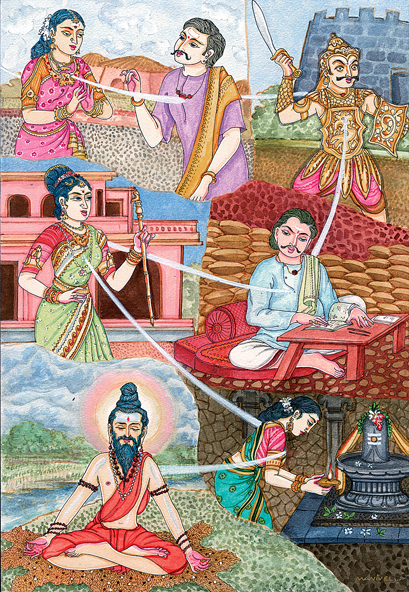
Living a moral life, known as dharma, is one of the goals of life for Hindus.

 Today's Learning Objective  Explain the major beliefs and practice of the religion of Hinduism. 


The Basic Beliefs of Hinduism: The Four Goals of Life  Today we will continue our study of the religion of Hinduism, while using our Hinduism Study Guide (A Central Idea and Its Parts) document to take notes. Our focus today is on learning about the "Four Goals of Life" for Hindus. First, we will watch the video "The Four Goals of Hinduism: Kama, Artha, Dharma, & Moksha" produced by the site Education Portal. Next, we will read excerpts from our Social Studies textbook Ancient Civilizations below. 


Homework  Make sure to complete your End Caste System Discrimination - Persuasive Letter, which is due and will be published tomorrow, Friday, January 23