Friday, October 30, 2015

Google Mapping


Assignment Turn-In  Happy Halloween! Let's begin the day by making sure that  you have turned in the following assignments, which are due today: Hatshepsut and Ramses II - Comparison-Contrast Paragraph, Hatshepsut and Ramses II - Venn Diagram, Hatshepsut Notes, and Ramses II Notes.

CNN Student News and Current Event Mapping  As we watch CNN Student News today, identify one or two news stories that you can pinpoint geographically and place on the Current Event layer of your Social Studies World Map via Google Maps. 

China, Washington D.C., and South Carolina were all featured in today's segment. After pinning at least one of these places on your map, consider the most important question: What happened here? You should include a title for the event, the date(s) the event took place, a brief summary of what happened, and include an appropriate photo or video. 

Mapping Ancient History  Let's also continue using the 'Ancient History Layer' of your  Social Studies World Map today by adding some of the important historical events that you have learned about so far this year to your map. 

I've provided a list below of some of the historical events we've studied below (along with the page numbers you can learn about them from your Ancient Civilizations textbook). 


Once you've decided on an event, you need to research where it took place. Some of the places from ancient history no longer exist, so you may need to consult both historical and modern maps and compare them to figure out where the event should be pinned on your Google Map.

What happened there? Who was involved? When did it happen? Why was it significant? These are just some of the questions that good reporters ask. After you title your historical event on your map, include the answers to some of this questions as part of the accompanying text. In addition, to your textbook you may also consult reliable online sources to learn more about these historical events. And remember, you can also include an appropriate image or video that relates to the event. Have fun!

Thursday, October 29, 2015

Mapping History


CNN Student News and Current Event Mapping  As we watch CNN Student News today, identify one or two news stories that you can pinpoint geographically and place on the Current Event layer of your Social Studies World Map via Google Maps. 

Syria and Kodiak, Alaska were both featured in today's segment. After pinning at least one of these places on your map, consider the most important question: What happened here? You should include a title for the event, the date(s) the event took place, a brief summary of what happened, and include an appropriate photo or video. 

Mapping Ancient History  We have spent a sizable part of our Social Studies class time mapping events that are taking place around the world right now. But what about events about ancient history? Today you will have an opportunity to use the 'Ancient History Layer' of your  Social Studies World Map by adding some of the important historical events that you have learned about so far this year to your map. 

First, make sure you've added an 'Ancient History Layer' to your Google Map and that is it checked. You may also consider temporarily unchecking the 'Current Events Layer' so there is not confusion about what layer you are working on. 

 
Next, decide which events from ancient history that you've learned about so far that you would like to pin on your map. I've provided a list below of some of the historical events we've studied below (along with the page numbers you can learn about them from your Ancient Civilizations textbook). 

 
Be selective. You can't pin all of these events today. Which are you most interested in learning more about? Once you've decided on an event, you need to research where it took place. Some of the places from ancient history no longer exist, so you may need to consult both historical and modern maps and compare them to figure out where the event should be pinned on your Google Map.

What happened there? Who was involved? When did it happen? Why was it significant? These are just some of the questions that good reporters ask. After you title your historical event on your map, include the answers to some of this questions as part of the accompanying text. In addition, to your textbook you may also consult reliable online sources to learn more about these historical events. And remember, you can also include an appropriate image or video that relates to the event. Have fun! 

Homework  The following assignments are all due tomorrow, Friday, October 30:  Hatshepsut and Ramses II - Venn Diagram, Hatshepsut Notes, Ramses II Notes, and Hatshepsut and Ramses II - Comparison-Contrast Paragraph. 

Tuesday, October 27, 2015

Writing Comparison-Contrast Paragraphs


 Today's Writing Objective   Write informative/explanatory texts to examine a topic and convey information through the use of comparison/contrast.

Warm-Up: Selecting Your Similarities and Differences  As you know, today we will begin writing compare-contrast paragraphs in which we explain the similarities and differences between Hatshepsut and Ramses II. Before we do, however, we must decide which similarities and differences we find most important and want to feature in our paragraphs. 

Your task: Review the Hatshepsut and Ramses II Venn Diagram from yesterday. Using the highlight function, highlight the similarities and differences that you find most important from your venn diagram and that you may want to include in your compare/contrast paragraph.  

What Does a Comparison/Contrast Paragraph Look Like?  When you write to compare or contrast something, the topic sentence tells what you're comparing. The details tell how things are alike or different. 

Check out the example below. 

Also notice how the paragraph uses what we call signal words. Writers use signal words to show when they are comparing or contrasting. Signal words help the reader see that the writer is telling how things are alike or different and showing the connections between ideas. 

Lists of signal words can be found below. Make sure you utilize some of these words in your own paragraphs.

Notice how the example paragraph below employs signal words to show both similarities and differences. 

Lastly, what are the key elements of a good comparison-contrast paragraph? Check out the checklist below. 


Writing Your Hatshepsut and Ramses II Comparison-Contrast Paragraph  Now that you have examined a couple of examples and understand the essential elements of an good comparison-contrast paragraph, it's time to start writing your own. You can find the assignment Hatshepsut and Ramses II - Comparison-Contrast Paragraph in your Social Studies Google Classroom. You will have today and tomorrow to work on your paragraph in class, and it will be due on Friday, October 30.    

Monday, October 26, 2015

Comparing and Contrasting Hatshepsut and Ramses II


 Today's Social Studies Objective   Understand the significance of Queen Hatshepsut and Ramses the Great

 Today's Writing Objective
  Write informative/explanatory texts to examine a topic and convey information through the use of comparison/contrast

Introducing Comparing and Contrasting  To compare means to tell how two things are alike. To contrast means to tell how they are different. To better understanding comparing and contrasting, check out the video below. 


Applying the Skill: Comparing and Contrasting Hatshepsut and Ramses II  Today we will utilize the skill of comparing and contrasting in order to identify the similarities and differences between the two Egyptian pharaohs Queen Hatshepsut and King Ramses II. What do these two pharaohs have in common with each other? How are they different? 

You will use the document Hatshepsut and Ramses II - Venn Diagram, which you can find in Social Studies Google Classroom, to make note of these similarities and differences. As most of you know, when using a venn diagram, similarities are recorded in the overlapping section of the circles, while the differences between two subjects are made clear in the outer labeled areas of the circles which are not overlapping.

Today, you and your teammates are going to closely examine the two text sets related to Hatshepsut and Ramses II, as well as your Hatshepsut Notes and Ramses II Notes, and try to identify both similarities and differences between these two subjects. You will then record your findings on your Hatshepsut and Ramses II - Venn Diagram. Towards the end of class we will do a whole-class share-out, as each group will have the opportunity to share their similarities and differences with each other. 

Tomorrow, we will begin to construct compare and contrast paragraphs about Hatshepsut and Ramses II based on the similarities and differences we come up with today.  

Homework  Complete your Hatshepsut and Ramses II - Venn Diagram by tomorrow, Tuesday, October 27, so you can use it as a resource to help your write your upcoming Hatshepsut and Ramses II compare/contrast paragraph.

Friday, October 23, 2015

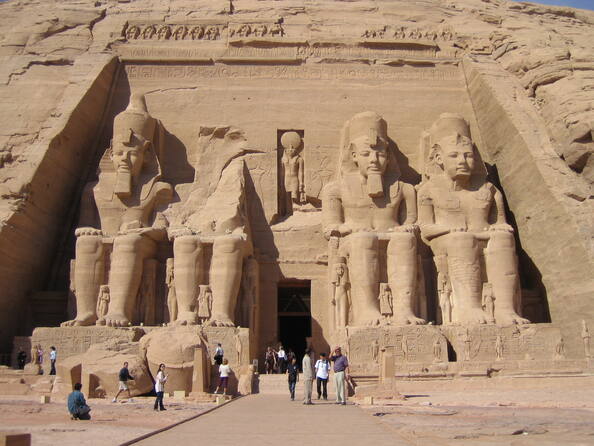
Egyptian Pharaoh Study: Ramses II


 Today's Learning Objective    Understand the significance of Ramses the Great

Warm-Up: What makes a great leader?  Today I want you to consider what makes a leader great? What qualities do great leaders possess? What do great leaders do? Can you think of any examples of great leaders? Share your ideas here.  

Examining Ramses II from Multiple Sources  Ramses II is considered by many to be the greatest leader in Ancient Egypt's history. But was he? In order to understand his significance we will be consider Ramses using multiple sources. We will examine a section from our Social Studies textbook, a primary source that includes Ramses's own words, a short documentary video, and finally a Powerpoint presentation designed by a teacher. By examining a text set composed of a variety of sources, my hope is that you will develop a more comprehensive understanding of this complex and remarkable figure from history.

You will use the document Ramses II Notes to document the important things you learn about him and his reign. 

We will begin by reading an excerpt from our Social Studies textbook below.    

Abu Simbel


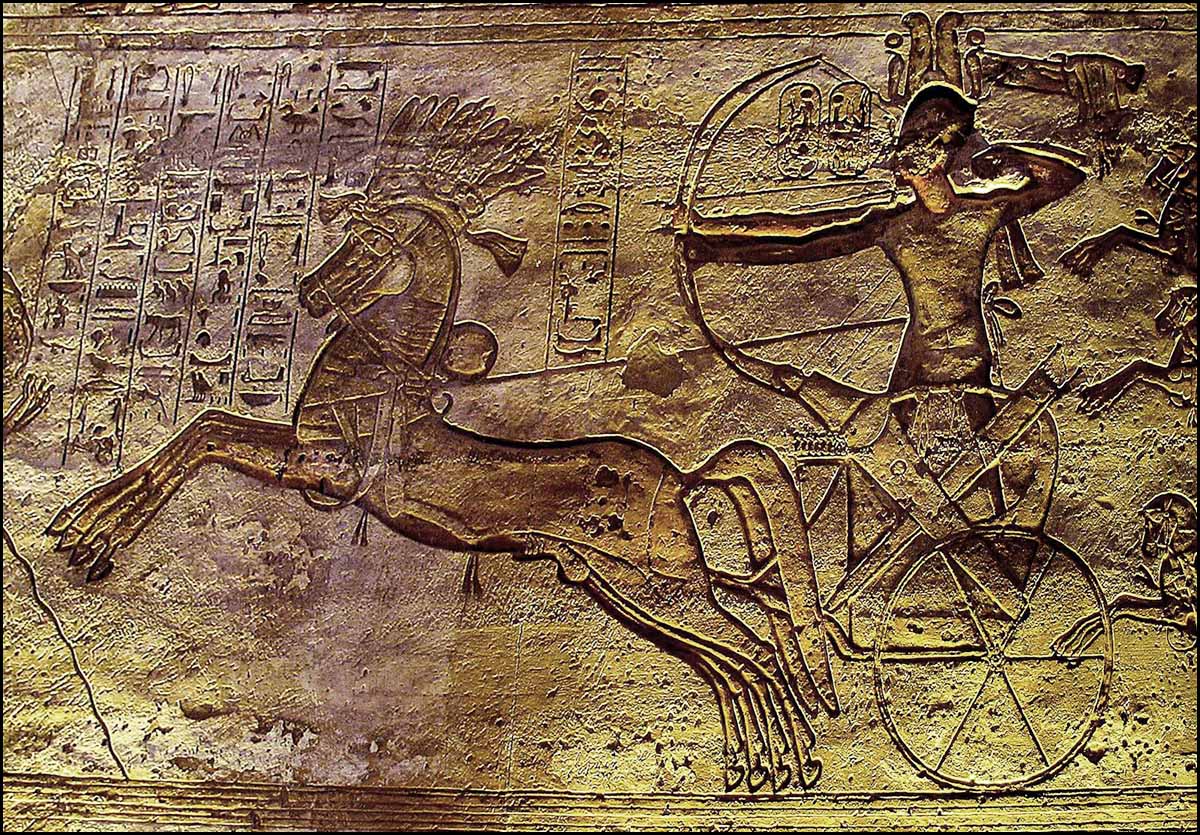
Now we will read Ramses's own words (an example of a primary source), in which he blames his own troops for the failures of the Battle of Qadesh.


Ramses the Great and the Battle of Qadesh 

Next, we will watch a video that takes a critical look at Ramses and cast him as essentially a propagandist who built shrines and monuments in his honor as a way of covering up his own failures. Is this a fair perspective?    


Finally, let's check out a PowerPoint presentation designed by a fellow teacher, which tries to take a more balanced view of Ramses II. 

Thursday, October 22, 2015

Egyptian Pharaoh Study: Hatshepsut


 Today's Learning Objective    Understand the significance of Queen Hatshepsut 

Examining Hatshepsut from Multiple Sources  Queen Hatshepsut was one of the most important leaders in Ancient Egypt's history. In order to understand her significance we will be consider Hatshepsut using multiple sources. We will examine a section from our Social Studies textbook, an excerpt from the book Hathshepsut: His Majesty, Herself, a primary source document that includes Hatshepsut's own words, a short documentary video, and finally a poem. By examining a text set composed of a variety of sources, my hope is that you will develop a more comprehensive understanding of this remarkable figure from history.

You will use the document Hatshepust Notes, located in your Social Studies Google Classroom, to document the important things you learn about her and her reign. 

We will begin by reading an excerpt from our Social Studies textbook below.    

Now we will read an excerpt from the book Hathsepsut: HIs Majesty, Herself, which focuses on what Hatshepsut did in order to be accepted as pharaoh by the Egyptian people. 


Next, we will examine a primary source. A primary source is a document or physical object which was written during the time under study. The words below are said to be Hatshepsut's and come directly form an obelisk (an Egyptian monument) inscription created during her reign. What do we learn about Hatshepsut from her actual words? Should this source carry more weight than others? 


Next, check out the short documentary video about Hatshepsut below. 


Finally, read this poem by Ruth Whitman written from the perspective of Hatshepsut. 


HATSHEPSUT:


Before my father came to the throne  


there was chaos in our double kingdom- 


from the Great Green Sea on the north  


to the land of Nubia on our south.


Men without breasts love war.  


They measure their height


by the mountains of severed hands  


piled up, cut from their enemies.


But I saw our land laid out in peace:  


Thebes, the southern city, the horizon of earth  


stretching east to west


and the fecund river cleaving the land


south to north.  


Sun and moon


sail from east to west


across the Nile,


from life to death


and back again.


Symmetry. Order.  


The Nile


floods, recedes, floods.


And over us stretches Nut, 


the goddess who is the sky. 


The sun travels by night 


through her body,


the moon and stars by day. 


Her toes touch the east,


her fingers reach to the west, 


she arches over us,


rainbow mother of night and day.

Homework  (1.) Complete the Map of Ancient Egypt, Egypt Under the Pharaohs - Cognitive Content Dictionary, and Authority Under the Pharaoh assignments, all of  which are due tomorrow, Friday, October 23. (2.) Continue working on the Hatshepsut Notes assignment, which is due next Friday, October 30.

Wednesday, October 21, 2015

Egypt Under the Pharaohs (Day 2)

 Today's Focus Question  How did the pharaohs gain authority over a large kingdom? 


Guided Reading: Egypt Under the Pharaohs  Today we are going to read about how the pharaohs, or rulers of Egypt, were able to gain the authority to rule over Egypt. Where did this assumed power come from? How were a succession of pharaohs able to maintain control of Egypt for so long? As we read excerpts of your Social Studies workbook below, you will use the document Sources of Pharaoh's Authority, which is located in your Social Studies Google Classroom, to take notes on this topic. 


Homework  Complete the assignment Sources of Pharaoh's Authority by Friday, October 23.